Peoples of the region
Major Tribes of Northeast India
Northeast India is the most culturally and linguistically diverse part of the country: more than two hundred indigenous communities live across the seven states covered here, speaking Tibeto-Burman, Austroasiatic and Tai languages within a few hundred kilometres of each other. This is a researched introduction to selected major communities — not a complete census of every group in the region.
7 states · 40+ communities · 200+ languages
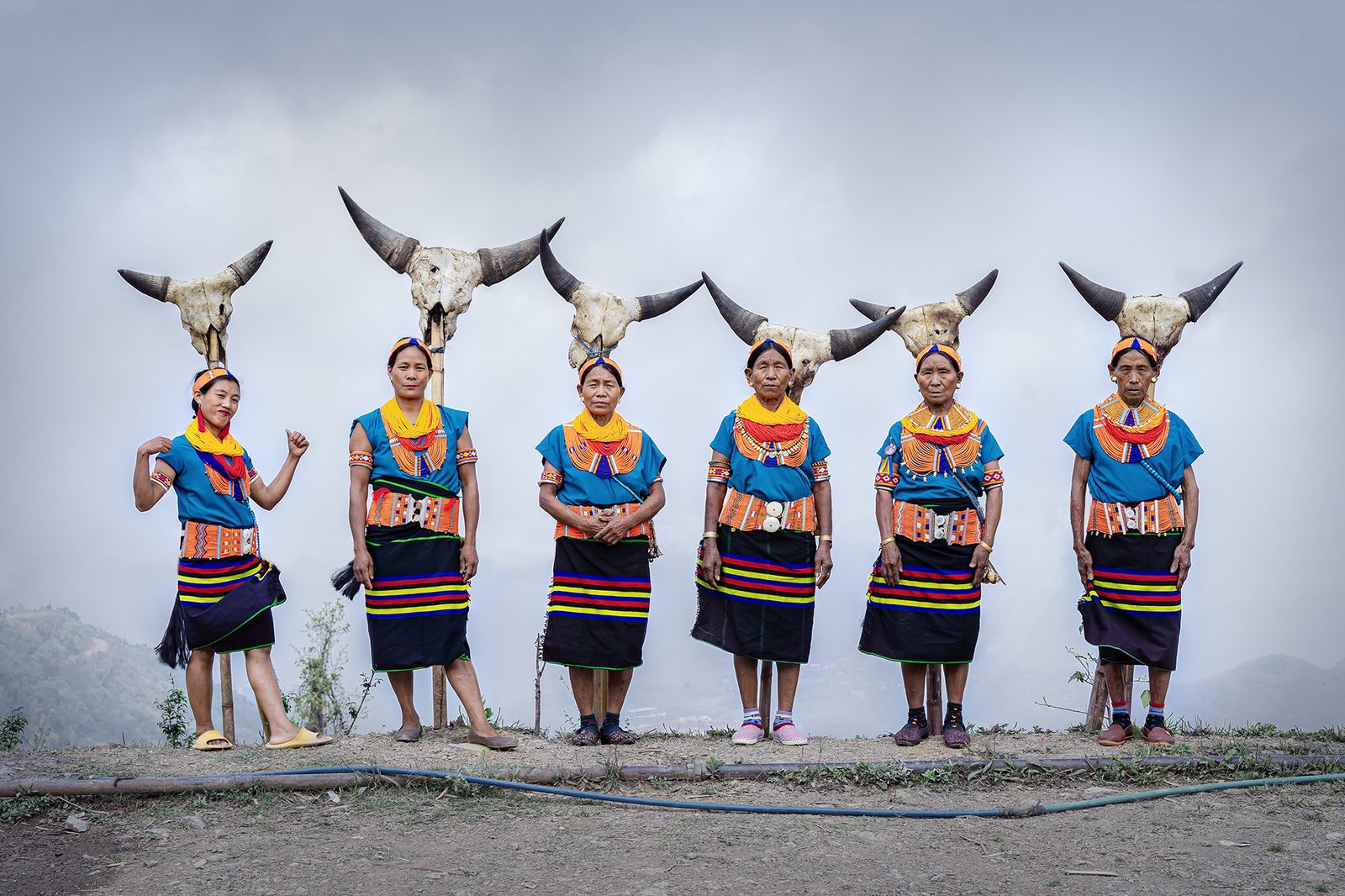
Photo: “Konyak Women” by Sujansarkarphotography — Wikimedia Commons, CC BY-SA 4.0
The tribes of Northeast India are best understood through where they live. Valley and riverbank communities such as the Bodo and Mising of Assam farm wet rice and weave at home; plateau communities such as the Khasi and Pnar of Meghalaya organise descent and inheritance through the mother's line; and the hill communities of Nagaland and Arunachal Pradesh — Angami, Ao, Konyak, Apatani, Adi, Nocte, Wancho, Monpa — built village republics, morungs and terraced fields on high ridgelines.
For a traveller, the cultural diversity of North East India is visible in ordinary things: the shape of a house, the pattern on a shawl, what is cooking, which month the village holds its main festival. The state guides below set out the indigenous communities of each state, the tribal festivals connected to them and the tribal villages you can visit responsibly.
Explore tribes by state
Tribes of Assam
Bodo · Mising · Karbi · Dimasa · Rabha
A traveller's guide to the major tribes of Assam — Bodo, Mising, Karbi, Rabha, Dimasa, Tiwa and Deori — their languages, weaving, festivals and the villages you can visit responsibly.
Read the Assam guide →Tribes of Meghalaya
Khasi · Pnar · Garo
Meet the major tribes of Meghalaya — Khasi, Pnar (Jaintia) and Garo — their matrilineal system, languages, living root bridges, festivals such as Wangala and Nongkrem, and how to travel respectfully.
Read the Meghalaya guide →Tribes of Arunachal Pradesh
Monpa · Apatani · Nyishi · Adi · Galo
A guide to the major tribes of Arunachal Pradesh — Monpa, Apatani, Nyishi, Adi, Galo, Tagin, Idu Mishmi, Nocte, Wancho, Tai Khamti — with their villages, festivals and cultural tours.
Read the Arunachal Pradesh guide →Tribes of Nagaland
Angami · Ao · Konyak · Sumi · Lotha
A guide to the major tribes of Nagaland — Angami, Ao, Konyak, Sumi, Lotha, Chakhesang, Zeliang, Sangtam and others — with their villages, festivals, weaving traditions and cultural tours.
Read the Nagaland guide →Tribes of Tripura
Tripuri · Reang · Jamatia · Chakma · Halam
Learn about the tribes of Tripura — Tripuri (Debbarma), Reang (Bru), Jamatia, Chakma, Halam, Mog and Noatia — their language, weaving, Garia Puja, Kharchi Puja and cultural travel in the state.
Read the Tripura guide →Tribes of Mizoram
Mizo (Lusei and related clans) · Hmar · Lai · Mara · Chakma
Understand the tribes of Mizoram — the Mizo clans including Lusei, Hmar, Ralte and Paite, along with the Lai, Mara and Chakma — their language, weaving, Chapchar Kut and how to travel in the state.
Read the Mizoram guide →Tribes of Manipur
Meitei · Tangkhul · Mao, Poumai and Maram · Rongmei and Zeliangrong · Kuki-Zo communities
An introduction to the communities of Manipur — the Meitei of the valley and the Naga and Kuki-Zo tribes of the hills — with their languages, crafts, festivals and guidance for travellers.
Read the Manipur guide →
Communities, villages and festivals connect
Tribal culture in Northeast India is not something you visit in a museum; it sits in a specific village and a specific week of the year. The Apatani of Ziro hold Myoko in March in villages such as Hong and Hija. The Konyak of Mon celebrate Aoleang in early April at Longwa and neighbouring villages; the Angami keep Sekrenyi in February around Kohima and Khonoma; the Garo hold Wangala in the Garo Hills after the harvest.
Best festivals to see tribal culture
December · Nagaland
Hornbill Festival
All 17 recognised tribes of Nagaland · Kisama Heritage Village
April · Nagaland
Aoleang Festival
Konyak · Mon District
March · Arunachal Pradesh
Myoko Festival
Apatani · Ziro Valley
November · Meghalaya
Wangala Festival
Garo · Asanang, West Garo Hills
November · Arunachal Pradesh
Chalo Loku Festival
Nocte · Khonsa, Tirap
April · Arunachal Pradesh
Mopin Festival
Galo · West Siang
Featured cultural and tribal tours
21 Days · Nagaland, Assam
Nagaland Tribal & Cultural Expedition
A deep cultural journey through the tribal heartland of Nagaland combining Angami, Ao, Lotha, Khiamniungan and Konyak communities with mountain landscapes, heritage villages, indigenous traditions, festivals and wildlife.
14 Days · Assam, Arunachal Pradesh, Nagaland
Arunachal Tribal Discovery Trail
A journey through the tribal landscapes of Arunachal Pradesh visiting the homelands of the Apatani, Tagin, Galo and Adi communities while exploring valleys, mountain roads, remote villages and river systems.
21 Days · Assam, Arunachal Pradesh, Nagaland
Northeast India Grand Cultural Expedition
A comprehensive cultural journey through Northeast India combining monasteries, tribal villages, heritage sites, tea gardens, river islands, wildlife reserves and some of the region's most iconic destinations.
10 Days · Arunachal Pradesh, Assam, Nagaland
Namdapha · Mon · Majuli · Kaziranga
A long arc through eastern Northeast India — from the rainforests of Namdapha and Digboi's oil heritage to Konyak Mon, the Ahom capital Sivasagar, the river island of Majuli and the rhino country of Kaziranga.
Travelling responsibly in tribal areas
- Ask before photographing anyone, and accept a refusal without negotiating.
- Visits are arranged with the village council or host family in advance, so the community decides the terms.
- Public festivals are open; ritual ceremonies, morungs during rites and private homes are not automatically open.
- Buy weaving, cane and pottery directly from the makers rather than from roadside resellers.
- Foreign nationals should check the current Protected Area Permit and Inner Line Permit rules before planning a route.
Frequently asked questions
- What are the major tribes of Northeast India?
- Among the largest and most widely known communities are the Bodo, Mising and Karbi of Assam; the Khasi, Pnar and Garo of Meghalaya; the Monpa, Apatani, Nyishi, Adi, Galo, Nocte and Wancho of Arunachal Pradesh; the Angami, Ao, Konyak, Sumi and Lotha of Nagaland; the Tripuri, Reang and Jamatia of Tripura; the Mizo (Lushai) clans of Mizoram; and the Tangkhul, Kuki and Naga communities of Manipur's hills alongside the majority Meitei community of the valley. The region as a whole has well over two hundred distinct communities and more than two hundred languages.
- Which Northeast Indian state has the most tribal communities?
- Arunachal Pradesh has the greatest number of distinct indigenous communities — official state lists count around 26 major tribes and more than a hundred sub-groups. Nagaland follows, with 17 or so recognised Naga tribes.
- Can tourists visit tribal villages in Northeast India?
- Yes, many villages welcome visitors, and several run community-managed homestays. Visits work best when they are arranged in advance with the village council or a host family, so that people are expecting you and the community is compensated. Sacred sites, private homes and ceremonies are not automatically open to visitors.
- What is the best time for a cultural tour of Northeast India?
- October to April is the main season: dry weather, clear hills and most of the important festivals. February to May suits Nagaland and eastern Arunachal (Sekrenyi, Aoleang, Mopin, Moatsu); November and December bring Wangala, Chalo Loku and Hornbill.
- Which festivals are best for experiencing Northeast Indian culture?
- Hornbill in Nagaland is the largest and easiest to attend. For festivals still held in their home villages rather than on a festival ground, Aoleang in Mon, Myoko in the Apatani valley, Chalo Loku in Tirap, Mopin in the Galo belt and Wangala in the Garo Hills are the strongest choices.
- Are tribal tours in Northeast India suitable for international travellers?
- Yes. Most of our guests are international travellers. Roads are slow and accommodation in villages is simple, but journeys are private and paced accordingly, and permits, transport and community introductions are handled for you.
- Do foreign tourists need permits for Nagaland or Arunachal Pradesh?
- Arunachal Pradesh requires a Protected Area Permit for foreign nationals and an Inner Line Permit for Indian nationals. Following the December 2024 order, Nagaland, Manipur and Mizoram are again under the Protected Area Regime for foreign nationals. See our permits guide for the current position.
- Can Living Roots arrange a private tribal tour?
- Yes. Every journey we run is private or small-group and built around your dates, the communities you want to meet and the festivals falling in that window.
- Is photography permitted in tribal villages and festivals?
- Usually yes in public spaces and at public festival grounds, but always after asking the person in front of you. Ritual spaces, morungs during ceremonies and funerary sites often are not photographable, and the answer differs village to village.
- How many days are needed for a Northeast India cultural tour?
- Ten to fourteen days covers one state properly with a festival. Three weeks or more is needed if you want to combine Nagaland with Arunachal Pradesh and Assam without spending every day on the road.
Plan a private tribal journey
Tell us the window you have and the communities or festivals you care about, and we will design a private cultural itinerary around them.