Festivals of Nagaland
Festivals of Nagaland — Tribal Calendar, Hornbill & Beyond
Nagaland is often called the Land of Festivals, and for good reason. Sixteen recognised tribes and dozens of sub-tribes — Angami, Ao, Sumi, Lotha, Chakhesang, Konyak, Phom, Khiamniungan, Yimchunger, Sangtam, Chang, Pochury, Zeliang, Rengma, Kuki and Kachari — each follow their own agrarian calendar, and every cycle of sowing, harvest, purification and warrior remembrance is marked by a festival rooted in centuries of oral tradition.
Most Naga festivals are not staged spectacles. They are living community rites — sung in dialects that travellers will rarely have heard before, danced in feather and shawl regalia that families weave themselves, and feasted around hearth fires shared with neighbours. A handful, like the Hornbill Festival in Kohima, have grown into international cultural showcases. Many others remain village affairs that visitors can join only through trusted introductions.
This page brings together the festivals of Nagaland we cover in depth — when they happen, who hosts them, what to expect on the ground, and how to plan a respectful visit in 2026.
Festivals we cover
4 festivals
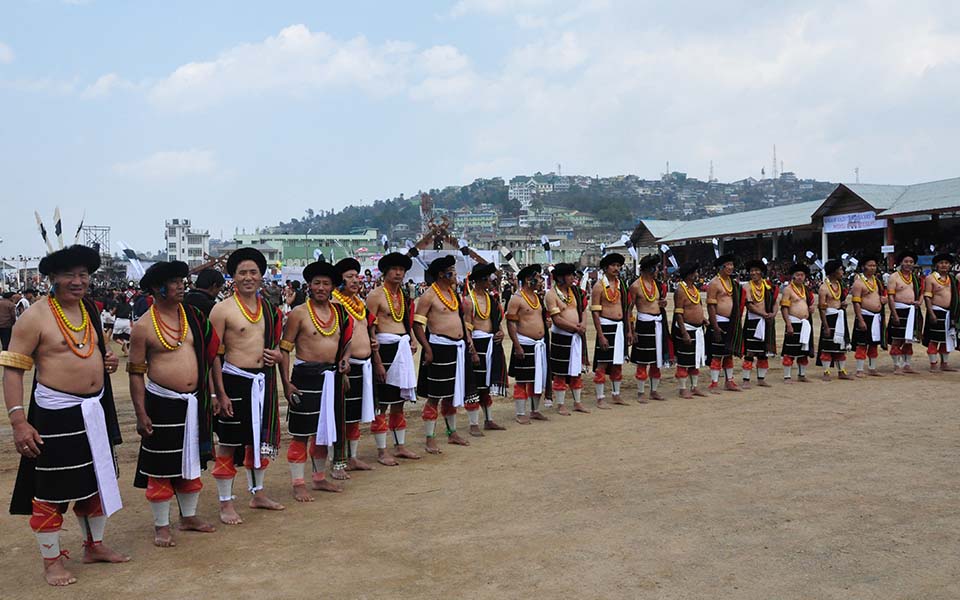
February · Angami Naga
Sekrenyi Festival
Kohima
A ten-day Angami purification festival of cleansing rituals and shared meals.

April · Konyak
Aoleang Festival
Mon District
The Konyak new-year festival — six days of seed-sowing rites and warrior dances.
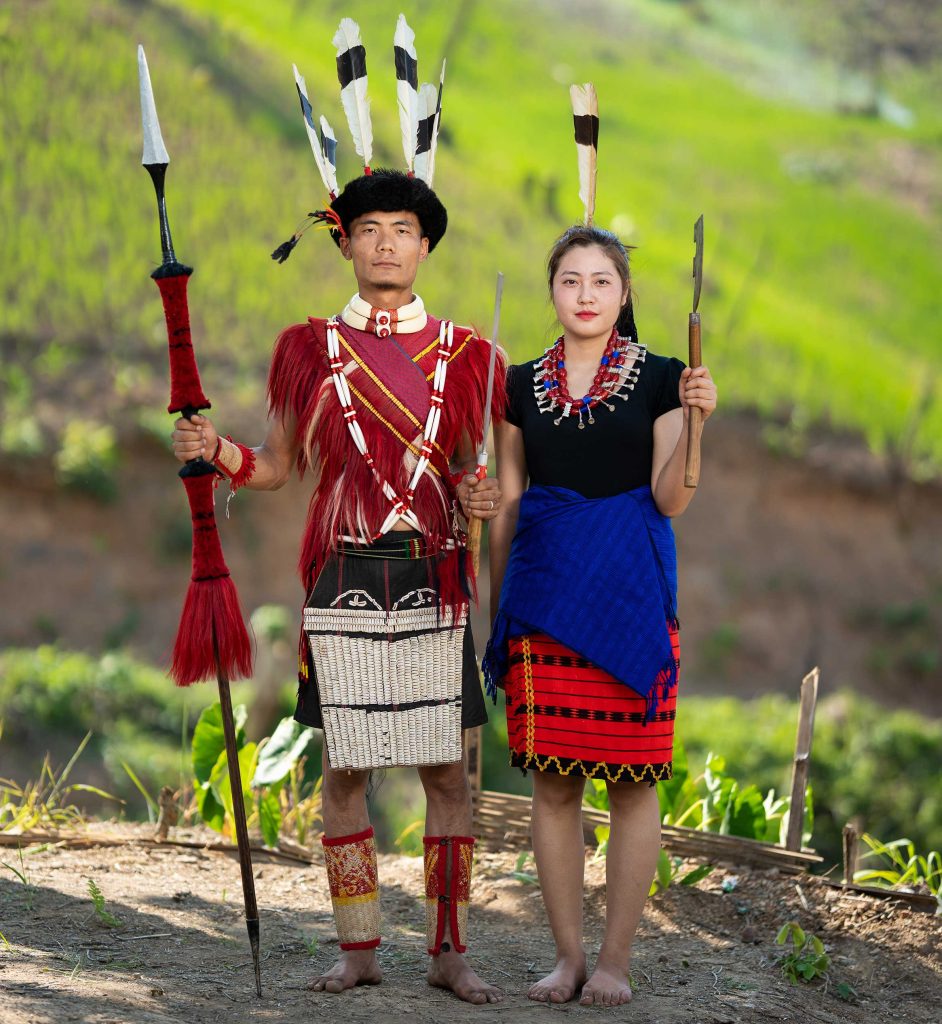
May · Ao Naga
Moatsu Festival
Mokokchung
An Ao Naga celebration after the sowing season, marked by Sangpangtu fire feasts.
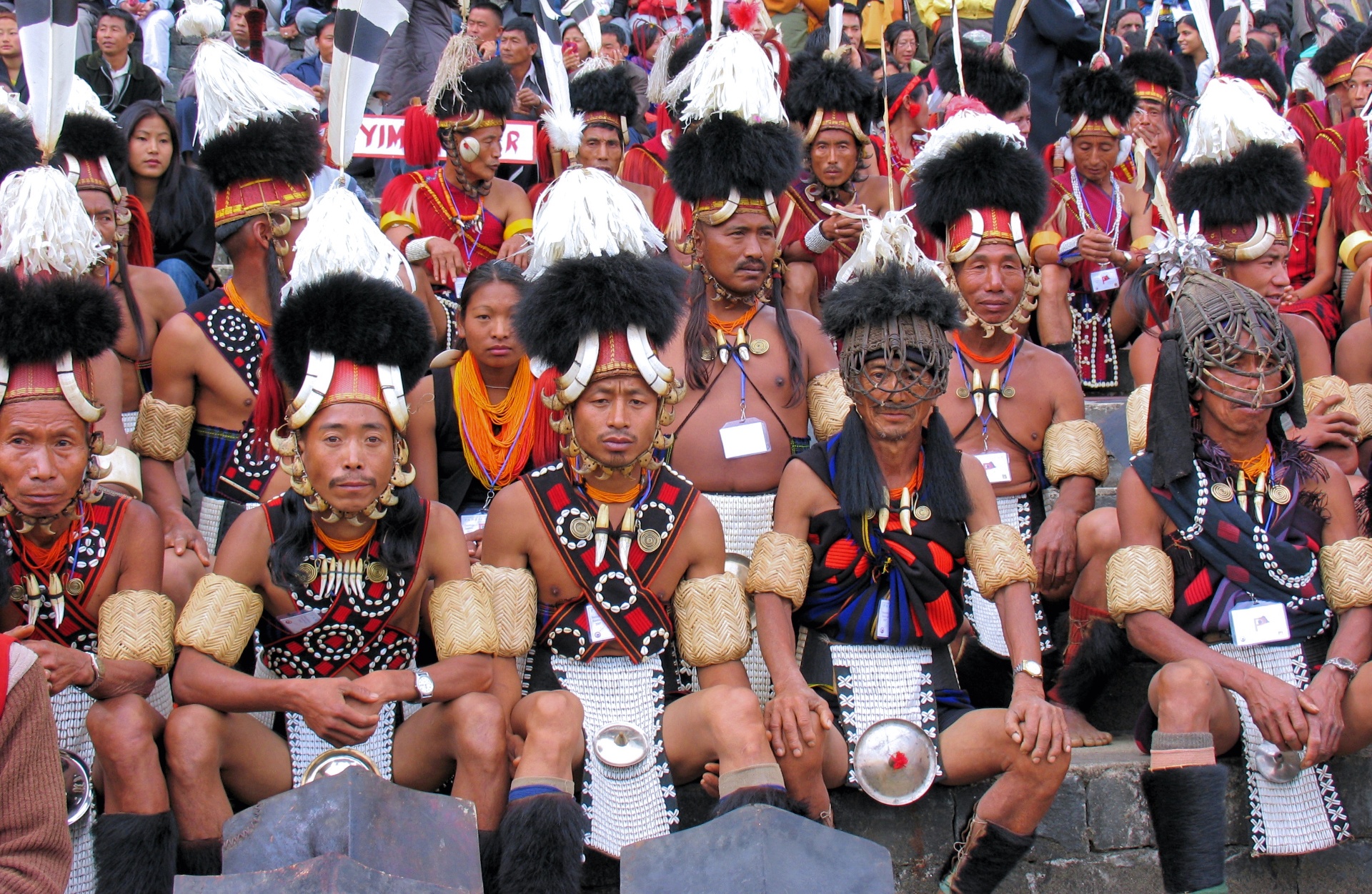
December · All 17 recognised tribes of Nagaland
Hornbill Festival
Kisama Heritage Village
The Festival of Festivals — ten days of Naga music, warrior dances and tribal heritage.
A tribal calendar shaped by the land
Nagaland's festivals follow the rhythm of jhum (shifting) cultivation. The year begins in the cold months with purification rites that ready the body and the village for the agricultural season. Sekrenyi, the Angami festival of cleansing in February, is the clearest example — ten days of ritual baths, abstinence, song and feasting that mark a community-wide reset.
Spring brings sowing festivals like Aoleang in early April, when the Konyak of Mon district celebrate the new year with extraordinary regalia, fire rituals, log-drum processions and feasts that span several villages. The Ao tribe's Moatsu in May closes the sowing season with three days of song, dance and shared meals after the hard work of clearing and planting is done.
The harvest period, from late autumn into winter, is when Nagaland's calendar is busiest. Tokhu Emong (Lotha), Tsükhenyie (Chakhesang), Tuluni (Sumi) and a dozen other tribe-specific harvest festivals fall between October and December. The state-organised Hornbill Festival from 1–10 December gathers representatives from every Naga tribe in one place at Kisama Heritage Village, just outside Kohima — for many travellers, this is the gateway into Naga culture.
The Hornbill Festival and why it still matters
Hornbill is the festival most visitors hear about first. Held every year from 1 to 10 December at Naga Heritage Village, Kisama, about 12 km from Kohima, it was created by the Government of Nagaland in 2000 to give all sixteen recognised tribes a shared platform to perform, exhibit, cook, weave and meet. Today it draws cultural delegations, photographers, journalists and travellers from across India and abroad.
What makes Hornbill more than a folk fair is the morung — the traditional bachelor's dormitory and learning house. Each tribe builds its own morung on the Kisama grounds, decorating it with carvings, skulls (replicas now), log drums and weapons, and hosting visitors with rice beer, smoked meats and conversation. Spend a morning moving between morungs and you'll learn more about Naga social structure than any museum could teach.
The festival runs alongside Naga Wrestling, the Hornbill International Rock Contest in Kohima, indigenous games, a chilli-eating competition built around the bhut jolokia, a Miss Nagaland pageant, literature events and night bazaars. It's intense, crowded in the first week and worth planning carefully — accommodation in Kohima books out months in advance.
Festivals beyond Hornbill: where the real depth lies
Travelling for the Hornbill Festival alone gives you a curated cross-section, but the most rewarding Naga journeys spend time in the home villages where these traditions actually live. Aoleang at Longwa, Shangnyu and Chui in Mon district is unforgettable — Konyak elders with full facial tattoos still gather, log drums are sounded, and the Angh's longhouse at Longwa physically straddles the India–Myanmar border.
Sekrenyi in Kohima district, hosted in Angami villages like Jakhama and Viswema, opens up the spiritual core of Naga society — the cleansing baths, the kizie blessing of grain and meat, and the men's choirs that sing into the night. Moatsu at Ungma, one of the largest Ao villages, is a gentler, food-led celebration of community after planting.
Smaller tribe-specific festivals — Tuluni (Sumi, July), Tokhu Emong (Lotha, November), Yemshe (Pochury, October), Mongmong (Sangtam, September), Naknyulum (Chang, July) and Monyu (Phom, April) — are best accessed through local hosts. We list the ones with dedicated guides below; others we can incorporate into a custom itinerary on request.
When to visit Nagaland for festivals
December is the obvious answer because of the Hornbill Festival, and it remains the easiest entry point for first-time visitors. Weather is dry and cool — typically 5–18 °C in Kohima — and road access is at its best.
Travellers wanting a quieter, more intimate experience often prefer February for Sekrenyi, April for Aoleang and the Konyak villages of Mon, or May for Moatsu at Ungma. These months involve more village-stay logistics but reward you with festivals that have not been reshaped for outside audiences.
Avoid the monsoon (June to early September) for any festival travel in Nagaland. Many roads — particularly into Mon, Tuensang and Kiphire — become difficult, and several villages are effectively cut off.
Permits, access and getting there
Indian citizens no longer need an Inner Line Permit for Nagaland, though hotel and homestay registration is still recorded. Foreign nationals must register on arrival under the Protected Area regime — your tour operator typically handles this with the Foreigners Registration Office at Dimapur or Kohima.
The main rail and air gateway is Dimapur (airport code DMU, daily flights from Kolkata and Guwahati). Kohima is a three-hour drive uphill. For Mon district and the Konyak villages, the practical approach is via Sivasagar/Sonari in Assam, then a long road day in. Tuensang and Noklak are best reached overland from Mokokchung or Kohima with overnight stops.
Within the state, hire a vehicle with a local driver who knows the dialect zones. Distances look short on a map but mountain roads are slow — budget half a day for any major transfer.
Travelling responsibly in Naga villages
Always ask before photographing tattooed elders, dancers in regalia and any ritual moment. A small gift — salt, tea, a printed photo from a previous visit — opens doors that a camera never will. Cover shoulders and knees inside village morungs and church compounds; modern Naga society is predominantly Christian and Sunday is observed quietly.
Buy directly from village weavers, blacksmiths and bamboo-craft co-operatives where possible. Stay in community-run guesthouses and homestays rather than chain hotels — your night's stay funds the cooks, drivers and trackers who keep these traditions visible.
Nagaland festival calendar 2026
Month-by-month snapshot of the festivals listed above. Cross-reference with our complete Northeast calendar when planning a multi-state itinerary.
February 2026
- Sekrenyi Festival
Kohima · Angami Naga
- Sekrenyi Festival
April 2026
- Aoleang Festival
Mon District · Konyak
- Aoleang Festival
May 2026
- Moatsu Festival
Mokokchung · Ao Naga
- Moatsu Festival
December 2026
- Hornbill Festival
Kisama Heritage Village · All 17 recognised tribes of Nagaland
- Hornbill Festival
Expeditions that include Nagaland
Curated multi-day itineraries operated by Living Roots Expeditions that weave Nagaland festivals into a wider Northeast India journey.
Cultural & Tribal · 21 Days
Nagaland Tribal & Cultural Expedition
A deep cultural journey through the tribal heartland of Nagaland combining Angami, Ao, Lotha, Khiamniungan and Konyak communities with mountain landscapes, heritage villages, indigenous traditions, festivals and wildlife.
Cultural & Tribal · 14 Days
Arunachal Tribal Discovery Trail
A journey through the tribal landscapes of Arunachal Pradesh visiting the homelands of the Apatani, Tagin, Galo and Adi communities while exploring valleys, mountain roads, remote villages and river systems.
Cultural & Tribal · 21 Days
Northeast India Grand Cultural Expedition
A comprehensive cultural journey through Northeast India combining monasteries, tribal villages, heritage sites, tea gardens, river islands, wildlife reserves and some of the region's most iconic destinations.
Festival Special · 9 Days
Cultural Tour with Hornbill Festival
A festival-anchored journey combining Kaziranga safaris, Majuli's Satras, a tea bungalow in Jorhat and two full days at the Hornbill Festival in Kisama with a side trip to the historic Angami village of Khonoma.
Cultural & Tribal · 10 Days
Namdapha · Mon · Majuli · Kaziranga
A long arc through eastern Northeast India — from the rainforests of Namdapha and Digboi's oil heritage to Konyak Mon, the Ahom capital Sivasagar, the river island of Majuli and the rhino country of Kaziranga.
Cultural & Tribal · 10 Days
The Northeast Explorer — National Parks to Tribal Villages
A complete eastern Northeast loop linking Namdapha's rainforests, Duliajan's oil heritage, Konyak Mon, Ahom Sivasagar, Vaishnavite Majuli and the rhino country of Kaziranga.
Frequently asked questions
- When is the Hornbill Festival 2026?
- The Hornbill Festival is held every year from 1 to 10 December at Naga Heritage Village, Kisama, 12 km from Kohima. Plan to arrive a day or two before opening and stay at least four full festival days to see all 17 recognised tribes of Nagaland perform.
- Do foreign tourists need a permit to attend festivals in Nagaland?
- Foreign nationals must register under the Protected Area Permit regime on arrival in Dimapur or Kohima. Indian citizens no longer need an Inner Line Permit but hotels record arrival details. Tour operators handle all paperwork in practice.
- Which Naga festival is the most authentic for a first visit?
- Hornbill in December gives you the broadest cross-section in one place. For a more village-rooted experience, Sekrenyi in February (Angami) or Aoleang in early April (Konyak, Mon district) are unforgettable and far less crowded.
- What is the best month to plan a Nagaland festival tour?
- December for Hornbill, February for Sekrenyi, early April for Aoleang and May for Moatsu. Avoid the monsoon (June–September). The harvest belt — October to early November — offers smaller, less-known tribe festivals across the state.
- How do I get to Kohima for the Hornbill Festival?
- Fly into Dimapur (DMU) from Kolkata or Guwahati, then drive 3–4 hours to Kohima. Many travellers combine this with an arrival in Guwahati and a road journey via Kaziranga National Park.
- Is it safe to travel in Nagaland?
- Yes. Nagaland is one of the safest states in Northeast India for travellers who plan with a local operator. Roads in remote districts (Mon, Tuensang, Noklak) are rough but well-travelled; Kohima and Dimapur are straightforward.
- Can I attend a Konyak village festival like Aoleang?
- Yes, with an introduction. Aoleang at Longwa, Shangnyu and Chui is open to respectful guests but accommodation is limited to community homestays. Book at least three months ahead through a Northeast India specialist operator.
- What should I wear to a festival in Nagaland?
- Comfortable layers — mornings in Kohima can be near freezing in December. Cover shoulders and knees inside morungs and churches. Sturdy walking shoes for muddy ground at village festivals, and a light rain shell year-round.
Plan a Nagaland festival trip
Build a custom itinerary with us.
Permits, transport, vetted homestays and on-ground guides for any festival in Nagaland.