The flagship expedition · Living Roots
The Ultimate Northeast India
Festival Expedition 2027
31 Days · 30 Nights · March–April 2027 · Exact departure dates to be confirmed
Why this expedition exists
One month. Three spring festivals. The whole eastern Himalaya in a single arc.
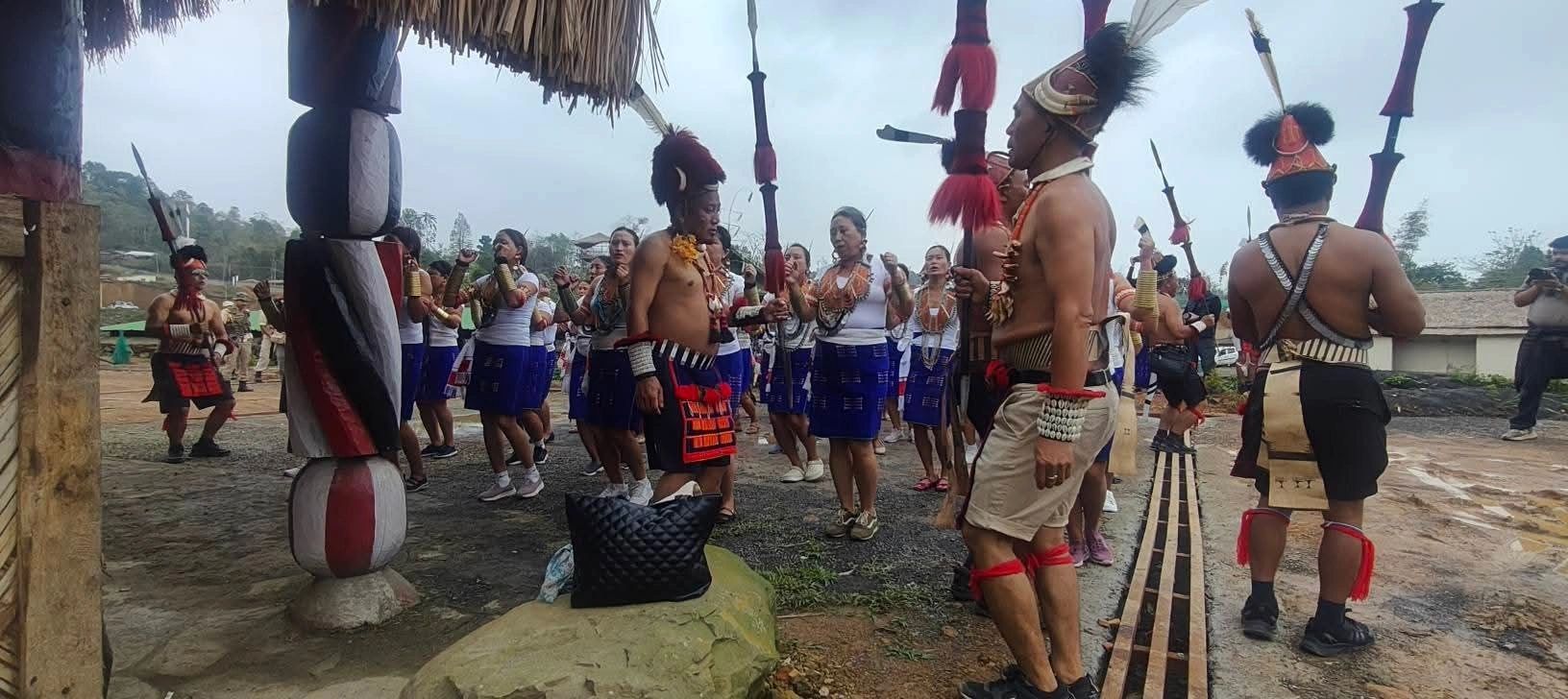
Most Northeast India tours pick one festival and build a week around it. The spring calendar makes something rarer possible: across March and April, three of the region's great indigenous festivals — Apatani Myoko, Konyak Aoleang Monyu and Galo Mopin — fall inside a single continuous overland route, together with the Garo Hills around Tura. This expedition is built around that window.
It is not a package tour with a festival bolted on. We travel with tribal interpreters in every district, we attend the village ritual days rather than only the government arena programmes, and we sleep in Apatani, Galo and Mising homes where the food, the stories and the access are. Between festivals, the route deliberately widens: the rhino grasslands of Kaziranga, the Vaishnavite sattras of Majuli, the living root bridges of Cherrapunjee, the Ahom monuments of Sivasagar, the Angami stone village of Khonoma.
It is designed for photographers, filmmakers, researchers and cultural travellers who would rather understand six communities properly than photograph twenty in passing. Group size is capped at twelve.
New to the region? Start with our guide to the festivals of Northeast India and the verified 2026 festival dates.
Expedition highlights
What 31 days actually buys you
31
Days on the road
A single unbroken arc from the Garo Hills to the Siang valley — no rushed fly-in, fly-out segments.
3
Indigenous spring festivals
Myoko, Aoleang Monyu and Mopin — timed so you arrive on the ritual days, not the tourist days.
3
States crossed
Meghalaya, Assam and Arunachal Pradesh, plus the length of Nagaland from Kohima to Mon.
12+
Tribal communities
Garo, Khasi, Apatani, Angami, Ao, Konyak, Galo, Mising, Adi, Nyishi, Tagin and Assamese Vaishnavite communities.
2
National parks
Kaziranga's rhino grasslands and the Brahmaputra wetlands around Majuli.
30+
Heritage sites & monasteries
Sattras of Majuli, Ahom monuments of Sivasagar, living root bridges, morungs and Angami stone villages.
The route
Guwahati to the Siang valley, overland
Sixteen bases across Meghalaya, Assam, Arunachal Pradesh and Nagaland. Tap any stop to see what happens there.
Schematic route diagram — positions are geographically ordered, not to survey scale.
Day 1 · Assam
Guwahati
Arrival, Brahmaputra gateway to the eight sister states.
Festival highlights
Three spring festivals, one route
Days 14–15 · March 2027 (dates to be confirmed)
Myoko
Apatani · Ziro Valley, Arunachal Pradesh
A month-long fertility and friendship rite rotating between Apatani villages, with priest chants, ritual pig sacrifice and open kitchens. This is the closest festival access on any Northeast India itinerary.
Read the Myoko guide →Day 25 · April 2027 (dates to be confirmed)
Aoleang Monyu
Konyak · Mon district, Nagaland
The Konyak new year — six days of feasting, log-drum dancing and the last generation of tattooed-face elders in full headhunter regalia. The single most photographic day of the expedition.
Read the Aoleang Monyu guide →Day 28 · April 2027 (dates to be confirmed)
Mopin
Galo · Aalo, West Siang, Arunachal Pradesh
Rice-flour blessings, Popir dance and apong shared through the village. A spring prosperity festival that closes the expedition on the banks of the Siang.
Read the Mopin guide →
Day by day
The full 31-day itinerary
March–April 2027 — exact departure dates to be confirmed. Festival days set the frame; travel days can flex if a village council moves a ritual date.
Day 01 ·
ArrivalArrival at Guwahati
Arrive into Guwahati, the Brahmaputra gateway to Northeast India. Evening briefing on permits, photography etiquette and the month ahead, followed by an Assamese welcome dinner.
Day 02 ·
TravelGuwahati – Baghmara
Drive south-west into the Garo Hills, trading the Brahmaputra plains for forested ridgelines above the Simsang river. Evening walk through Baghmara's border-town bazaar.
Day 03 ·
CultureBaghmara – Tura
Continue to Tura through Garo villages of bamboo longhouses and betel groves, stopping at Siju caves country. Afternoon introduction to Garo A·chik culture and drum-making.
Day 04 ·
CultureTura and the Garo Hills
A full day in and around Tura and the cultural landscape of the Garo Hills — bamboo longhouses, weekly markets, drum-making households and the A·chik way of life, explained by a Garo interpreter.
Day 05 ·
CultureVillages of the Garo Hills
A second day in the countryside around Tura: village visits, rice-beer hospitality in Garo homes, backstrap weaving and time with the makers of the oval drums that shape Garo music.
Circle dance on the second festival day. Day 06 ·
TravelTura – Shillong
Cross the Garo and Khasi hills to Shillong. Evening in the Khasi capital: Police Bazaar, Ward's Lake and the city's remarkable live-music culture.
Day 07 ·
TravelShillong – Cherrapunjee
Drive onto the Sohra plateau past Elephant Falls and Mawkdok gorge, arriving at the wettest inhabited place on earth. Sunset over the Bangladesh plains from the escarpment.
Day 08 ·
TrekDouble Decker Living Root Bridge trek
A 3,000-step descent to Nongriat and the double-decker living root bridge — Khasi bio-engineering grown from Ficus elastica over generations. Swim in the rainbow pools before the climb back.
Day 09 ·
CultureCherrapunjee sightseeing
Nohkalikai falls, Mawsmai caves, Arwah limestone fossils and the sacred grove of Mawphlang, where a Khasi elder explains the lyngdoh forest-protection system.
Day 10 ·
TravelCherrapunjee – Kaziranga National Park
Descend to the Brahmaputra valley and cross into Assam, arriving at Kaziranga by evening. Briefing on rhino conservation and the park's anti-poaching model.
Day 11 ·
WildlifeKaziranga National Park
Dawn safari in the Western range for one-horned rhinoceros, wild elephant, swamp deer and hog deer, and an afternoon drive in Central range grasslands. Excellent long-lens conditions in March light.
Day 12 ·
TravelKaziranga – Itanagar
Enter Arunachal Pradesh at the Banderdewa gate with Inner Line and Protected Area permits in hand. Afternoon at Ita Fort, the Jawaharlal Nehru State Museum and a Nyishi village on the town's edge.
Day 13 ·
TravelItanagar – Ziro
A winding mountain drive into the Apatani plateau at 1,500 m, arriving among terraced paddy-fish fields, bamboo groves and cane bridges. Evening walk in Hong or Hija village.
Day 14 ·
FestivalMyoko Festival — Ziro
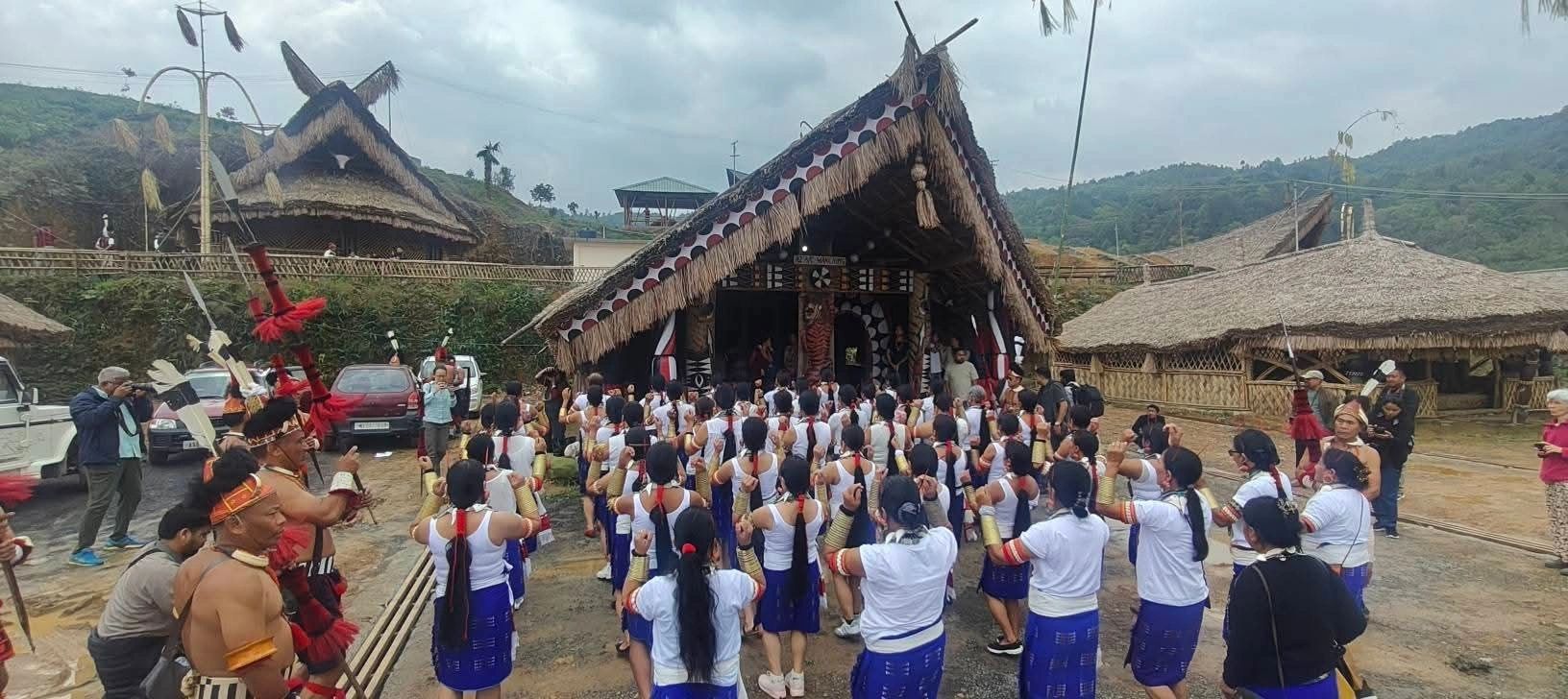
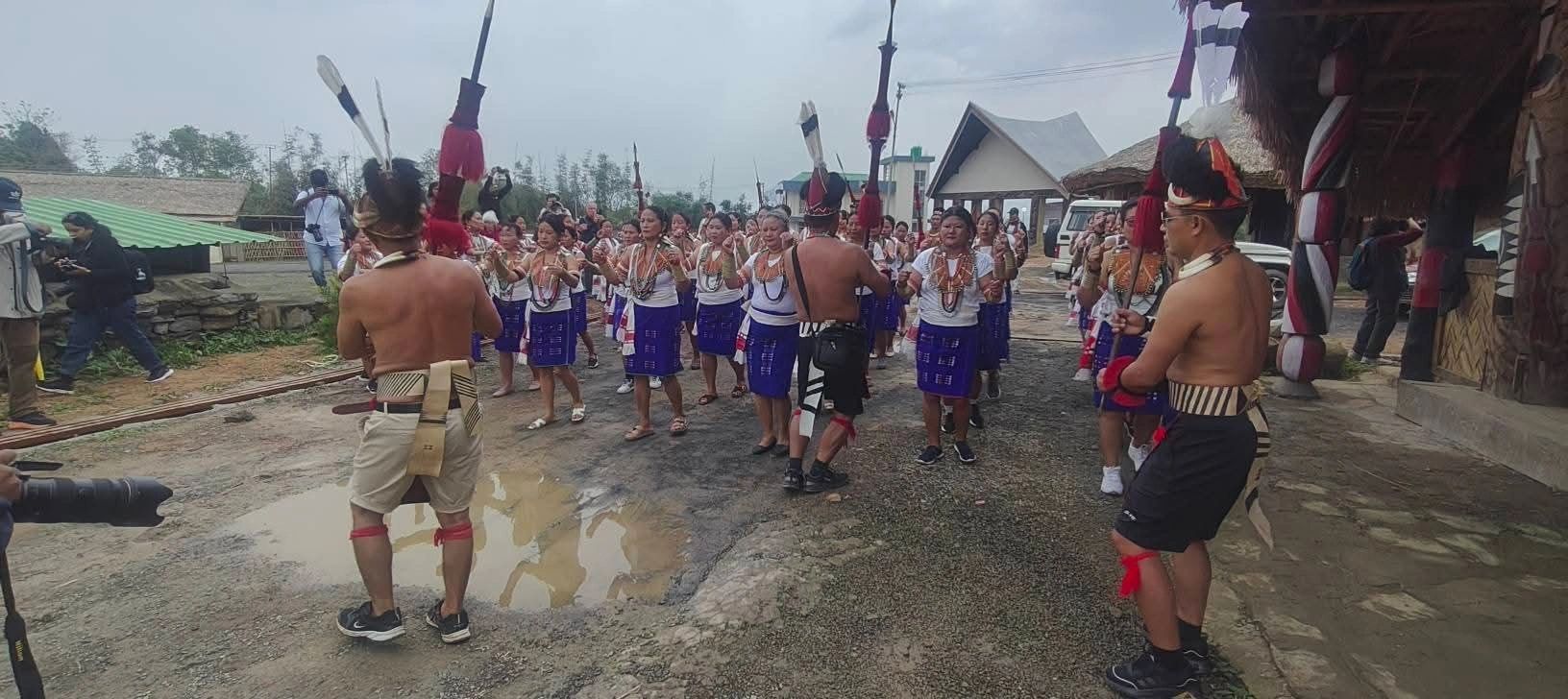
Myoko begins: shamanic priests chant through the night, the babo pole is raised and clans exchange ritual gifts. We follow one host family through the day rather than shuttling between sites.
Day 15 ·
FestivalMyoko & Apatani village experience
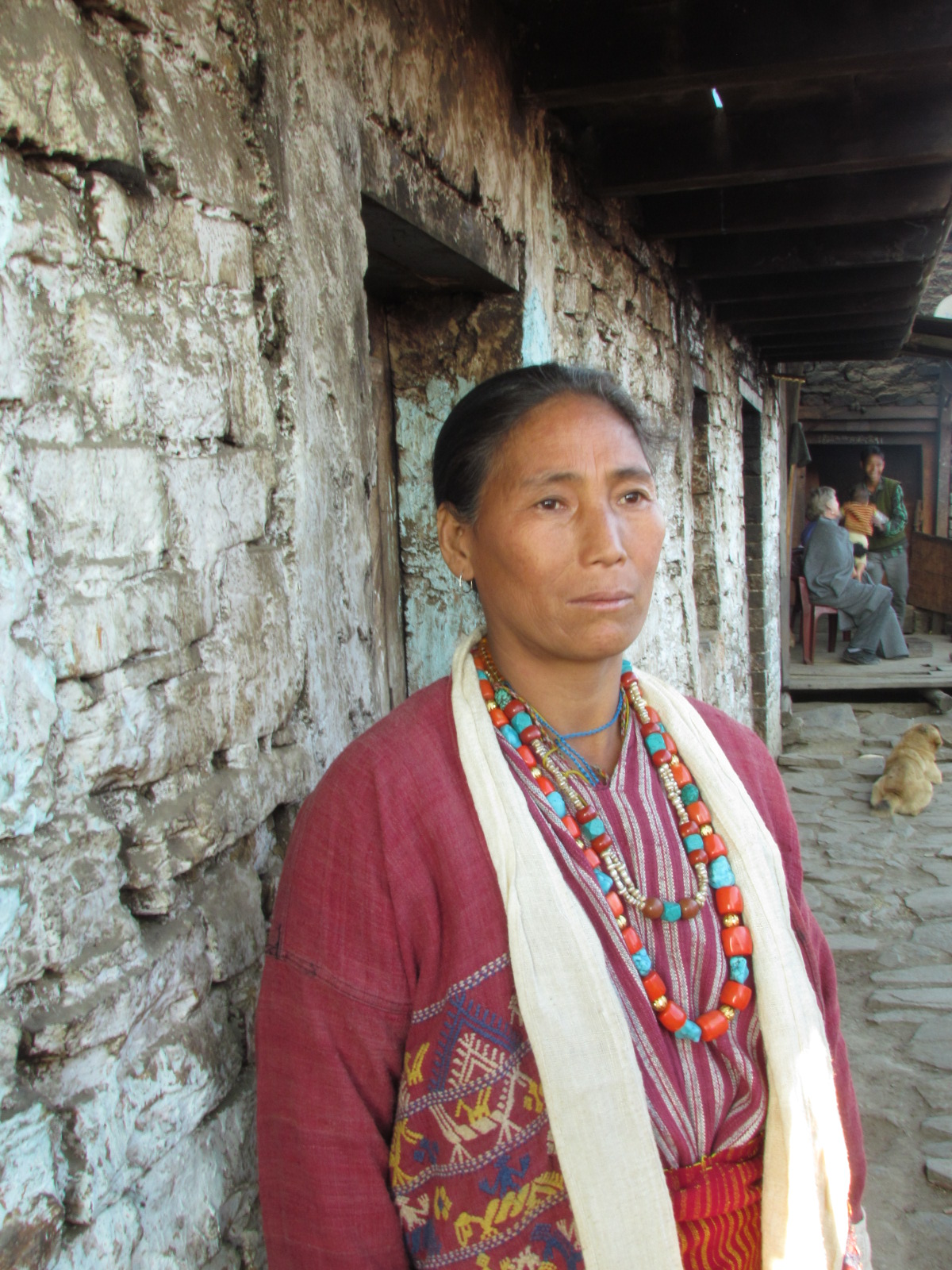
A second Myoko day, plus time with the last generation of tattooed Apatani women, the paddy-fish irrigation system and Ziro's bamboo craft households. Optional walk to Kile Pakho ridge.
Highland Arunachal: dress, weave and weather change with every valley. Day 16 ·
TravelZiro – Majuli
Descend to the plains and ferry across the Brahmaputra to Majuli, the world's largest river island. Sunset from the sandbanks as fishing boats come in.
Day 17 ·
CultureMajuli exploration
Sattra monasteries of Kamalabari, Auniati and Samaguri: Sattriya dance, mask-making workshops with the Goswami family, and Mising stilt-house villages along the channels.
Day 18 ·
TravelMajuli – Jorhat
Morning ferry back to the mainland and into Assam's tea belt. Afternoon at a working tea estate — plucking, withering, rolling and tasting — with a night in a planter's bungalow.
Day 19 ·
TravelJorhat – Kohima
Climb into the Naga hills to Kohima at 1,450 m. Evening at the Kohima War Cemetery, where the 1944 battle that turned the Burma campaign is remembered.
Day 20 ·
CultureKohima local sightseeing
Naga Heritage Village at Kisama — home of the Hornbill Festival — plus the state museum's tribal collections, Kohima's Sunday-market foodways and the Angami weaving cooperatives.
Day 21 ·
CultureKhonoma village
A full day in Khonoma, Asia's first green village and an Angami warrior stronghold: terraced alder fields, stone forts, the community conservation area and lunch in a heritage khel house.
Day 22 ·
TravelKohima – Mokokchung
North through the ridges into Ao country. Afternoon in Ungma, the largest Ao village, with its morung dormitories, log drums and clan histories told by the village council.
Day 23 ·
CultureMokokchung – Sivasagar
Drop into Upper Assam to the old Ahom capital: Rang Ghar amphitheatre, the seven-storeyed Talatal Ghar, Shiva Dol and the great temple tanks of a 600-year dynasty.
Day 24 ·
TravelSivasagar – Mon
Climb back into Nagaland to Mon, capital of the Konyak. Evening visit to a morung as villages finish their Aoleang preparations — opium-poppy fields, log drums and pounding rice.
Day 25 ·
FestivalAoleang Monyu Festival — Mon
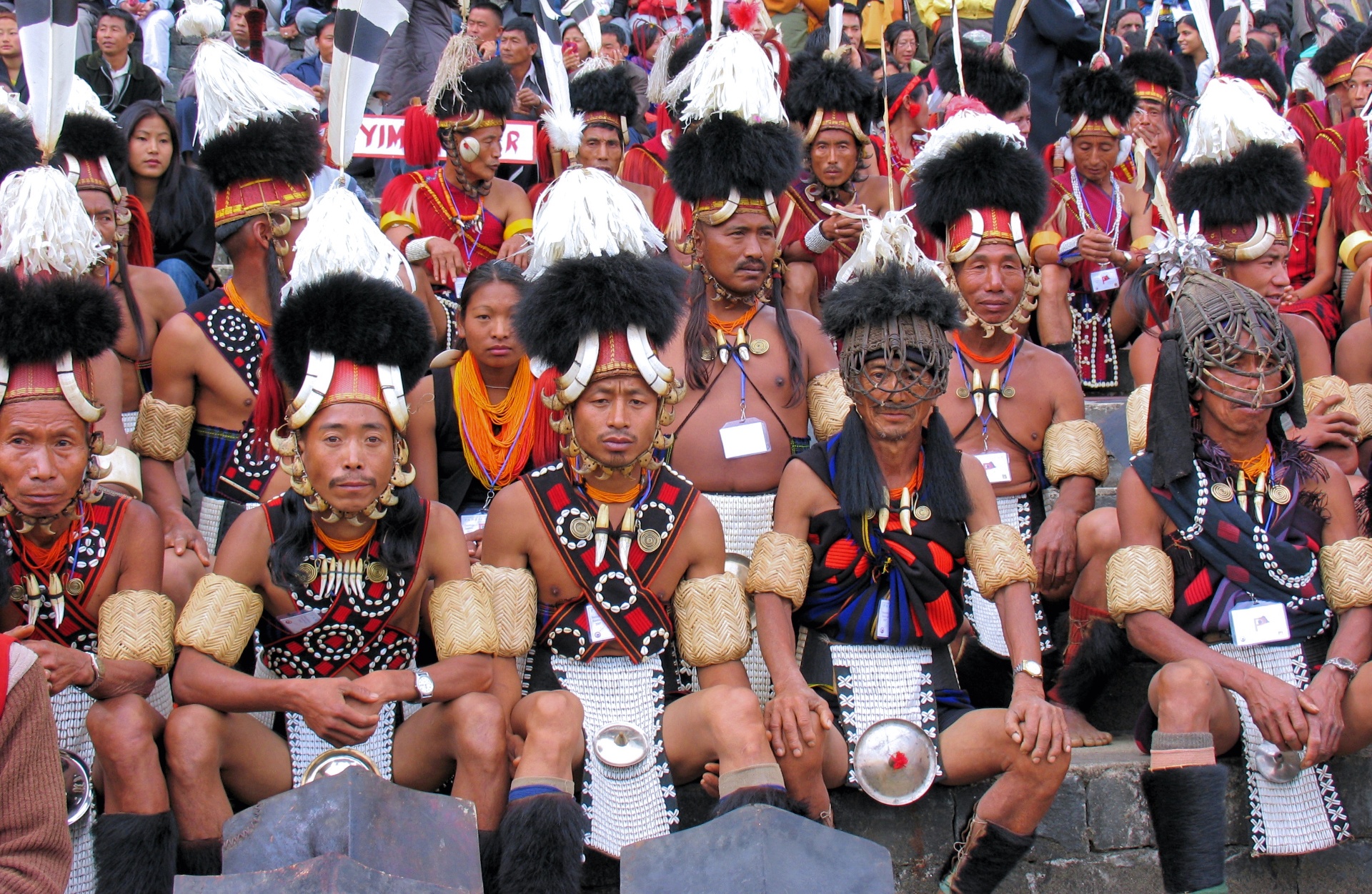
The Konyak new year in full: tattooed-face elders in hornbill-feather headgear, brass headhunter pendants, log-drum dancing, communal feasting and the Angh's ceremonial house. The expedition's defining day.
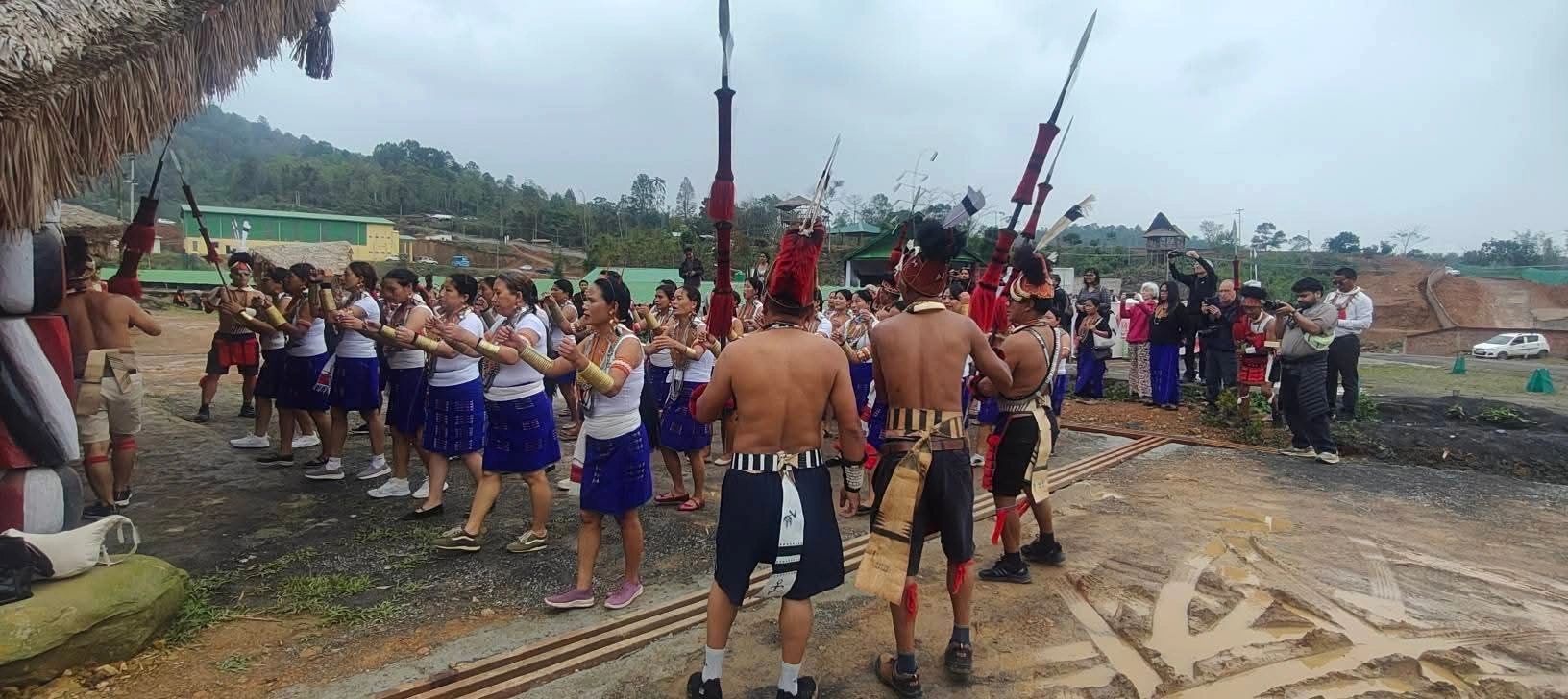
Aoleang Monyu in Mon — dancing around the Konyak log drum. Day 26 ·
TravelMon – Dibrugarh
Optional early morning at Longwa, where the chief's house straddles the India–Myanmar border, before descending to Dibrugarh through tea gardens and the Dikhow valley.
Day 27 ·
TravelDibrugarh – Aalo
Cross the Brahmaputra and follow the Siang upstream into West Siang district, arriving at Aalo among Galo villages of cane suspension bridges and riverside paddy.
Day 28 ·
FestivalMopin Festival — Aalo
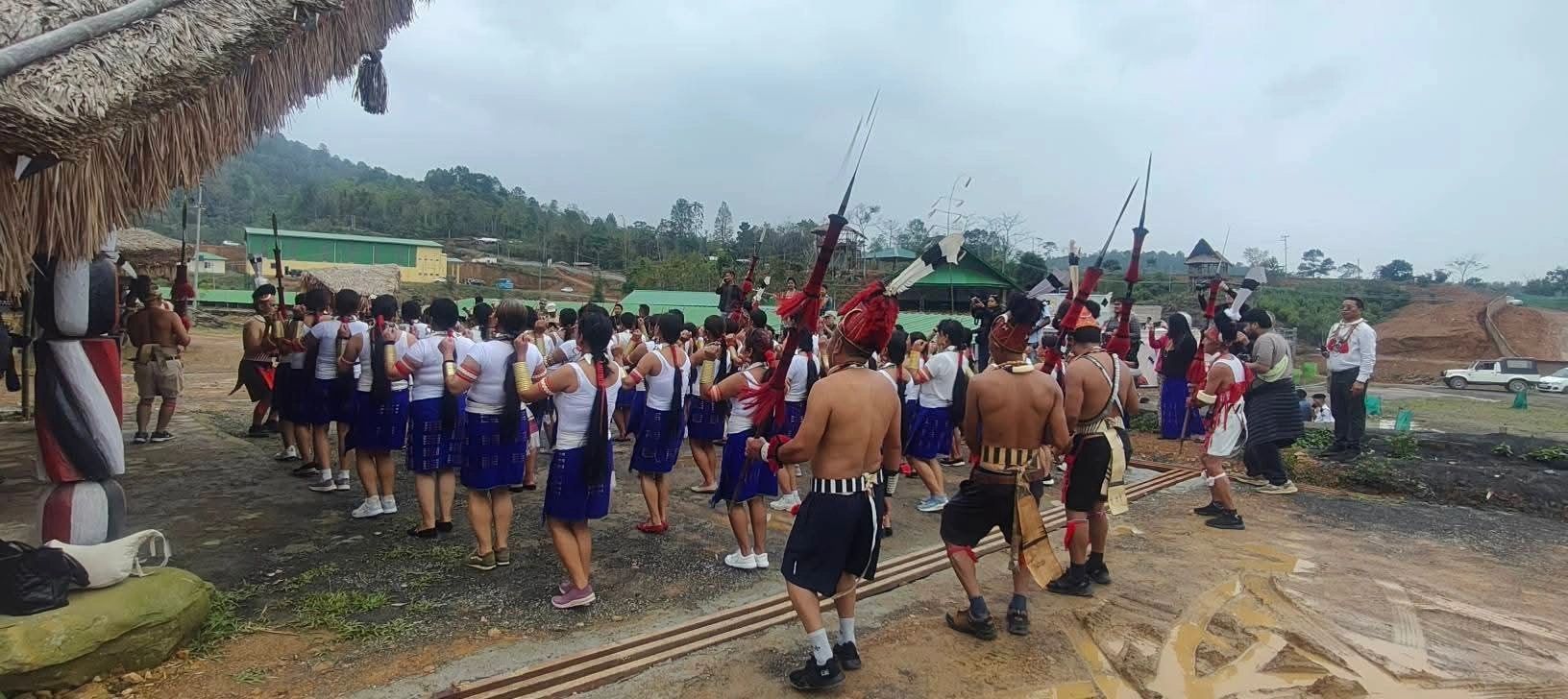
Mopin: rice flour smeared on faces as a blessing, Popir dance performed by young Galo women in white, apong rice beer shared house to house, and a community feast at the festival ground.
Day 29 ·
CultureAalo villages & Galo cultural experience
Kabu and Basar-belt villages, the Hanging Bridge over the Siyom, Galo weaving on backstrap looms and an afternoon of oral history with village elders.
Day 30 ·
TravelAalo – Dibrugarh
A last drive down the Siang valley to Dibrugarh. Farewell dinner in a tea bungalow with a review of the month's photographs and recordings.
Day 31 ·
DepartureDeparture from Dibrugarh
Transfer to Dibrugarh (Mohanbari) airport for onward connections via Kolkata or Delhi.
Accommodation & transport
Where you sleep, how you move
Guwahati, Shillong, Dibrugarh
Boutique hotels & heritage bungalows
Comfortable town bases with reliable power, wifi and laundry between remote legs.
Cherrapunjee & Kaziranga
Eco-resorts and forest lodges
Escarpment-view cottages at Sohra; park-edge lodges with early-safari access at Kaziranga.
Ziro, Aalo, Majuli
Homestays with Apatani, Galo and Mising families
Simple rooms, shared bathrooms in places, and the best food and access on the whole route.
Kohima, Mokokchung, Mon
Guesthouses & village homestays
During Aoleang, Mon accommodation is basic and booked a year ahead — we hold rooms from January.
Transport
- Private non-AC/AC SUVs (Toyota Innova, Scorpio or Bolero depending on terrain) with experienced Northeast hill drivers throughout.
- Two Brahmaputra ferry crossings — Nimati Ghat to Majuli, and the Dibrugarh–Siang crossing.
- Maximum group size of 12 travellers across three vehicles, so every seat is a window seat for photography.
- Airport transfers at Guwahati (GAU) on arrival and Dibrugarh (DIB) on departure.
What's included
Included & excluded
Included
- 30 nights' accommodation in hotels, lodges and village homestays as listed
- All meals from dinner on Day 1 to breakfast on Day 31
- Private vehicles, fuel, driver allowances, tolls and parking for the full 31 days
- English-speaking expedition leader for the entire route
- Local tribal guides and interpreters at Tura, Ziro, Kohima, Mokokchung, Mon and Aalo
- All festival entries, community contributions and village hosting fees
- Inner Line Permits (Indian nationals) and Protected Area Permit processing (foreign nationals)
- Two Kaziranga safaris (jeep, park fees, camera fees) and Majuli ferry charges
- Living root bridge trek with a local Khasi guide
- Bottled/filtered drinking water and a Northeast India field handbook
Not included
- International and domestic airfares to Guwahati and from Dibrugarh
- Indian visa fees and travel insurance (mandatory, including medical evacuation)
- Alcohol, personal shopping, laundry and telephone/data charges
- Optional extras such as elephant safaris, helicopter segments or private drone permissions
- Tips for drivers, guides and homestay hosts
- Anything not explicitly listed under what's included
Important information
For international travellers
Permits (PAP & ILP)
Foreign nationals need a Protected Area Permit for Nagaland and Arunachal Pradesh; Indian nationals need Inner Line Permits. Both are handled for confirmed travellers, but PAPs need 60 days' lead time and passport scans.
Best time to travel
March–April is the indigenous spring festival season across the Northeast: Myoko, Aoleang Monyu and Mopin fall inside one month, with clear light, cool hills and pre-monsoon greenery.
Flights & entry
Fly into Guwahati (GAU) and out of Dibrugarh (DIB) — both connect via Delhi and Kolkata. An e-Visa is valid for both airports; carry printed copies of visa, permits and insurance.
Health & readiness
No compulsory vaccinations, but typhoid, hepatitis A and tetanus are advised. Altitude stays below 1,700 m throughout. Medical facilities are limited in Mon and Ziro — evacuation insurance is mandatory.
Money & connectivity
Carry cash for Mon, Ziro and Aalo; ATMs are unreliable and cards are rarely accepted. Only Indian SIMs work in Arunachal and Nagaland, and foreign nationals cannot easily buy prepaid SIMs — expect quiet days.
Photography etiquette
Always ask before photographing elders, rituals and inside morungs. Some ceremonies bar cameras entirely. Our guides negotiate access village by village, and we contribute a hosting fee to every community we photograph.
Questions
Frequently asked questions
- Do foreign nationals need a Protected Area Permit for this expedition?
- Yes. Following the December 2024 MHA circular, foreign nationals require a Protected Area Permit (PAP) for Nagaland, Manipur and Mizoram, and for Arunachal Pradesh. This expedition crosses both Nagaland and Arunachal Pradesh, so PAPs are mandatory. We process them for confirmed travellers with a minimum lead time of 60 days — read our full permit guide before booking.
- Is 31 days too long for one trip?
- It is the shortest realistic window in which the Garo Hills, Myoko, Aoleang Monyu and Mopin can be reached in one continuous overland journey. The spring festival calendar spaces them across March and April. Shorter versions exist, but they force you to pick one festival.
- Who is this expedition designed for?
- Photographers, filmmakers, anthropologists and researchers, and independent-minded cultural travellers who want depth rather than coverage. It is not a soft-adventure holiday: expect long mountain drives, basic homestays in festival districts and full days in the field.
- How physically demanding is it?
- Moderate. The only sustained effort is the Nongriat living root bridge trek (about 3,000 steps down and back up). Otherwise the challenge is endurance — several 6–8 hour drives on hill roads, and consecutive early starts during festival days.
- What is the group size and can I join as a solo traveller?
- Maximum 12 travellers, minimum 4. Solo travellers are welcome; we pair same-gender roommates where possible, and a single supplement applies if you prefer a private room.
- What camera equipment should I bring?
- A 24–70mm and a 70–200mm cover almost everything; a fast prime is useful inside dark morungs. Bring more batteries and cards than you think you need — power is intermittent in Mon and Ziro during festival week. Drones require separate written permission in Nagaland and Arunachal Pradesh.
- What is the weather like in March and April?
- Pleasant. Expect 12–26°C in the hills and up to 30°C in the Assam plains, with occasional pre-monsoon showers from late March. Nights in Ziro, Kohima and Mon are cold enough for a fleece and light down layer.
- Can the itinerary be customised or shortened?
- Yes. Common variants are a 21-day version dropping the Garo Hills or the Meghalaya leg, and a December departure built around the Hornbill Festival instead. Tell us your dates and priorities and we will rebuild the route.
- Are the 2027 departure dates confirmed?
- Not yet. The expedition is planned for March–April 2027 and exact departure dates will be published once Myoko (Ziro), Aoleang Monyu (Mon) and Mopin (Aalo) are announced by the village councils and state authorities. Register your interest and we will confirm dates as soon as they are set.
- How do I book and what is the payment schedule?
- Enquire by email with your dates and group size. A 25% deposit confirms your place and starts permit processing; the balance is due 60 days before departure. Because permits and Mon accommodation are secured a year ahead, we recommend registering interest early for the March–April 2027 departure.
Booking & enquiry
Twelve places. One departure. March–April 2027.
Permits take 60 days and Mon accommodation is held a year ahead. Tell us your dates, group size and whether you are travelling to photograph, film or research — we will reply with availability and a full costing.
Enquire by email