Cultural travel editorial
10 Best Festivals in Northeast India Worth Travelling For
A selection of festivals across Nagaland, Meghalaya, Arunachal Pradesh, Manipur and Assam that give a journey its shape — what each one is for, what a traveller can honestly expect to see, and which landscapes and villages belong with it.
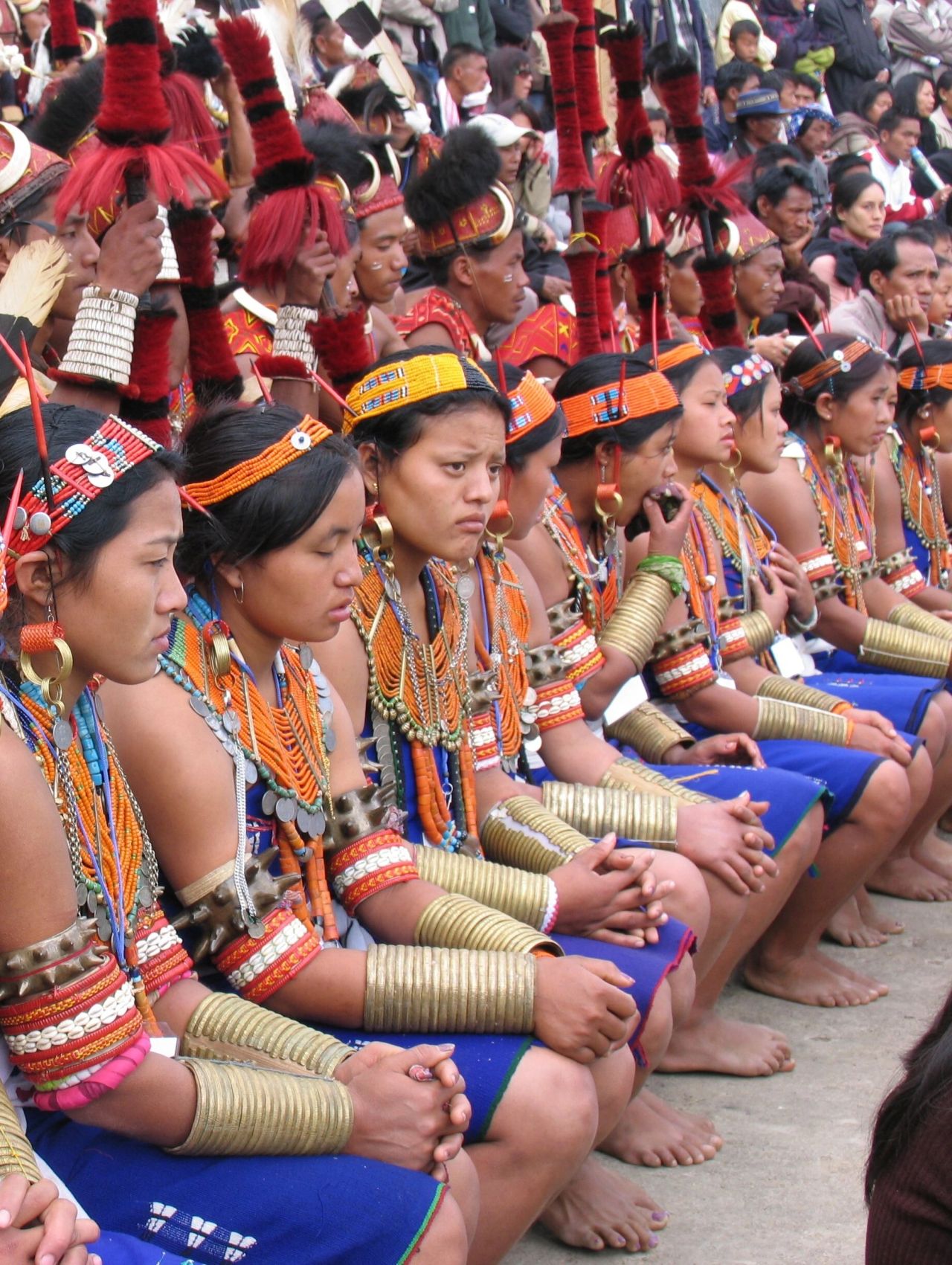
Why a festival changes the whole journey
Very little of what happens at a festival in Northeast India was arranged for visitors. Most of these occasions grew out of the agricultural year — the clearing of fields, the sowing, the harvest, the rest that follows it — and they carry the work of the community with them: the obligations between clans, the authority of village institutions, the ancestral offerings, the weaving that only appears on certain days, the food that is cooked in quantity because everyone must be fed.
That is the practical reason a festival is worth building a trip around. The same road, the same village, the same valley behaves differently in festival week. Doors that are politely closed in October are open in April. A morning that would otherwise be a photograph of a landscape becomes a morning spent in someone's kitchen while the pigs are prepared and the older men argue about the order of the rites.
It is also the reason the choice matters. A December visit to Hornbill gives you seventeen Naga communities in one venue and a comfortable, well-organised week. An April week in Mon during Aoleang gives you one community, slowly, with all the unpredictability that implies. Neither is better; they are different journeys, and confusing them is the most common planning mistake we see.
The ten festivals below were chosen because each gives a clear, defensible reason to travel — a distinct community, a specific landscape, and a set of days when both are at their most legible. They are not the only festivals worth attending in the region; our full guide to festivals of Northeast India covers the wider calendar, state by state.
Quick comparison
Seasons rather than dates. Many of these festivals are announced by community bodies a few weeks or months ahead — see the confirmed festival dates page and the festival calendar for current announcements.
Hornbill Festival
- State
- Nagaland
- Community
- All 17 recognised tribes of Nagaland
- Season
- Early December, ten days
- Where
- Kisama Heritage Village, near Kohima
Wangala Festival
- State
- Meghalaya
- Community
- Garo
- Season
- Usually November, after the harvest
- Where
- Asanang and other grounds in the Garo Hills, near Tura
Aoleang Festival
- State
- Nagaland
- Community
- Konyak
- Season
- Early April, around six days
- Where
- Mon district — Mon town, Longwa, Chui and surrounding villages
Mopin Festival
- State
- Arunachal Pradesh
- Community
- Galo
- Season
- Early April, around five days
- Where
- Aalo (Along) and villages of West Siang and Leparada
Myoko Festival
- State
- Arunachal Pradesh
- Community
- Apatani
- Season
- March, with the main days late in the month
- Where
- Ziro Valley — Hong, Hari, Bamin-Michi and neighbouring villages
Reh Festival
- State
- Arunachal Pradesh
- Community
- Idu Mishmi
- Season
- February, several days
- Where
- Dibang Valley and Lower Dibang Valley — Roing, Anini and community grounds
Chalo Loku Festival
- State
- Arunachal Pradesh
- Community
- Nocte
- Season
- Late November, around three days
- Where
- Khonsa and Nocte villages of Tirap district
Sekrenyi Festival
- State
- Nagaland
- Community
- Angami
- Season
- Late February, around ten days
- Where
- Kohima and Angami villages — Khonoma, Jakhama, Kigwema
Heikru Hidongba
- State
- Manipur
- Community
- Meitei
- Season
- September, around the Heikru month in the Meitei calendar
- Where
- Bijoy Govinda, Imphal — the Thangapat moat
Rongali Bihu (Bohag Bihu)
- State
- Assam
- Community
- Assamese, with distinct forms among many communities of the Brahmaputra valley
- Season
- Mid-April, from around 14 April
- Where
- Across Assam — Guwahati, Jorhat, Sivasagar, Majuli and countless villages
01 · Nagaland
Hornbill Festival
- Community
- All 17 recognised tribes of Nagaland
- Where
- Kisama Heritage Village, near Kohima
- Typical period
- Early December, ten days
- Ideal trip length
- 6–9 days including Kohima and the Angami villages
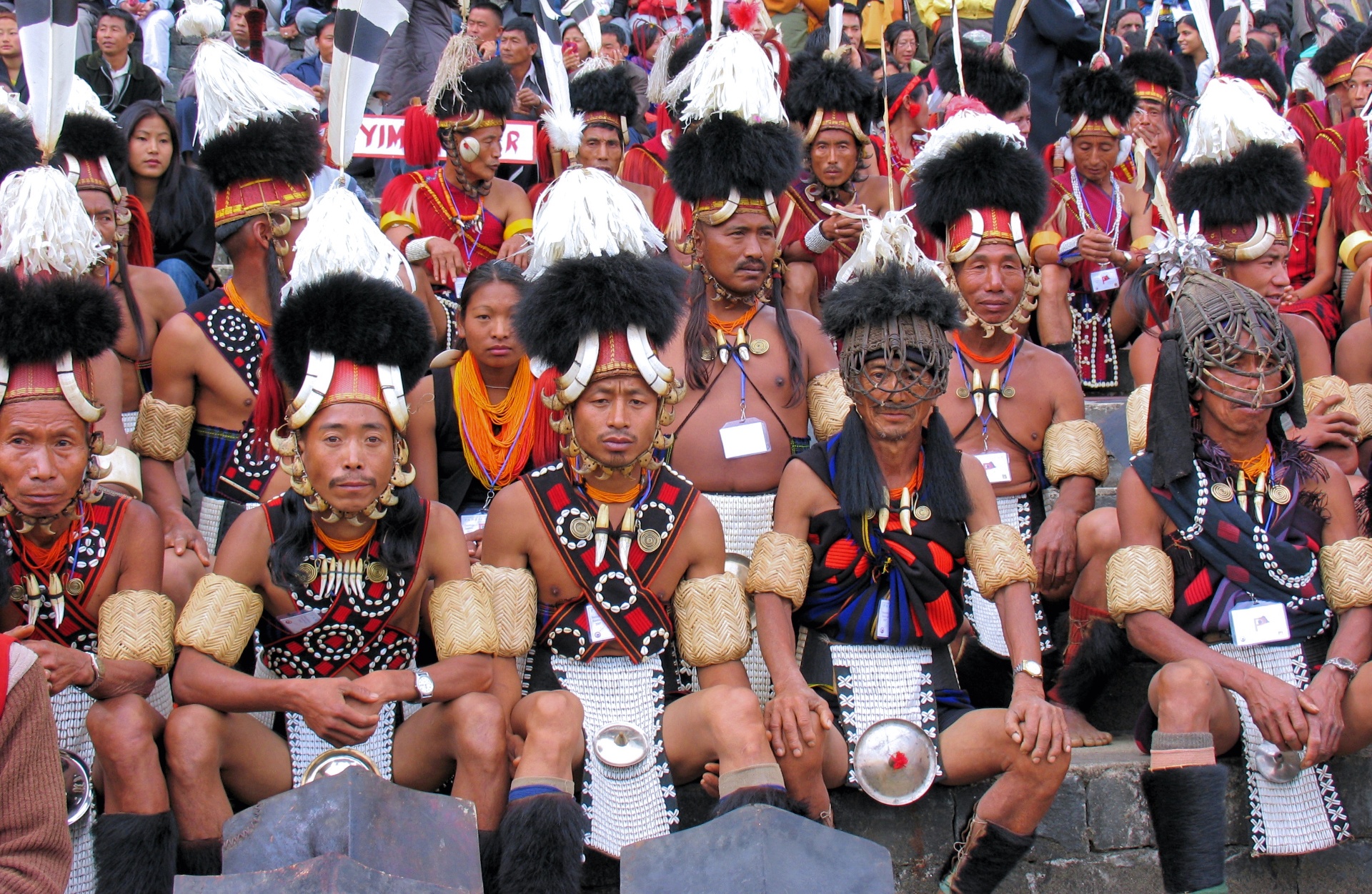
Hornbill is the state's own creation — a festival of festivals organised so that communities who once met mainly at village level could present their music, weaving, food and ceremonial dress on common ground. That origin matters, because it explains both what the event does well and what it cannot do. At Kisama each recognised tribe maintains its own morung, and within a single afternoon a traveller can move between Konyak, Angami, Ao, Chakhesang, Phom and Zeliang hosts, hear log-drum rhythms, taste smoked pork with axone and see textiles whose motifs are still clan-specific.
What visitors actually experience is a large, well-organised programme: morning arena performances, wrestling and indigenous games, craft stalls, a night bazaar in Kohima, and an international rock contest that draws a young Naga audience of its own. It is comfortable, photographable and easy to attend independently — which also means it is the least intimate festival on this list. Treat it as a doorway rather than the whole house.
The surrounding landscape is what turns Hornbill into a journey. Kohima holds the Commonwealth War Cemetery and the memory of the 1944 battle; Khonoma, a terraced Angami village a short drive away, has a long conservation history and a very different rhythm from the arena. Travellers with more time and reasonable fitness continue towards the Dzükou Valley for a walk in high grassland.
Plan around Hornbill if you want breadth — a first, structured encounter with Naga culture that can then be extended into quieter districts such as Mon, Phek or Longleng.
Combine withKohima + Kisama + Khonoma, with an optional Dzükou Valley walk.
Explore our complete Hornbill Festival guide →More festivals of Nagaland →

02 · Meghalaya
Wangala Festival
- Community
- Garo
- Where
- Asanang and other grounds in the Garo Hills, near Tura
- Typical period
- Usually November, after the harvest
- Ideal trip length
- 4–6 days across the Garo Hills
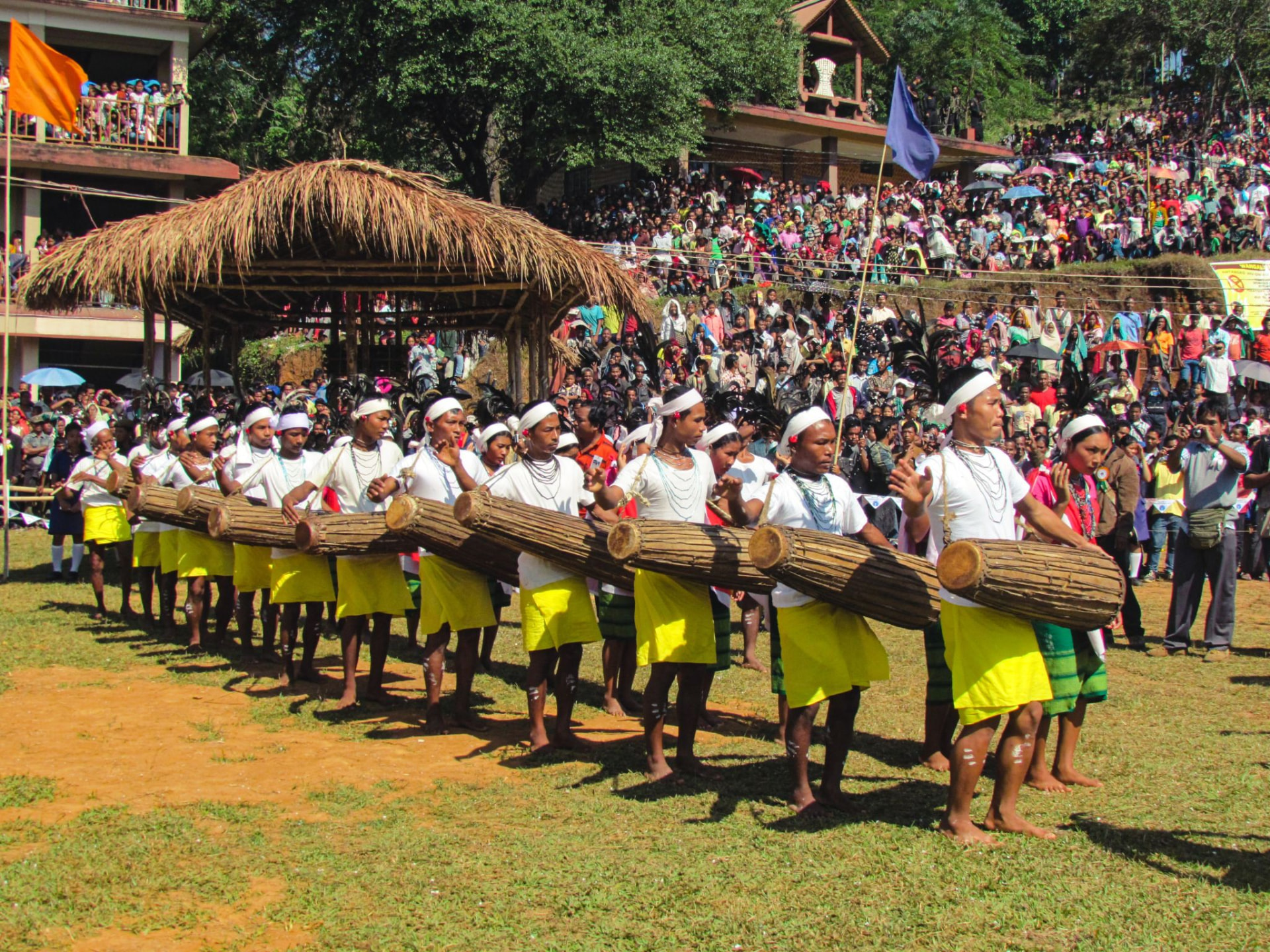
Wangala closes the agricultural year for the Garo. It is a thanksgiving addressed to Misi Saljong, associated with the sun and with the fertility of the fields, and it is performed only once the harvest is in. The version most travellers see — the Hundred Drums gathering near Tura — brings many village troupes together, but the ritual sequence it draws on, including the Rugala libation led by a Nokma, still belongs to the villages themselves.
The sound is the point. Long dama drums are carried at the hip in a slow advancing line, answered by buffalo-horn trumpets and flutes, while men in feathered headdresses and women in striped dakmanda cloth hold a formation that tightens and loosens for hours. It is far less scripted than a stage show and far more physical; standing at the edge of the ground you feel the drums before you separate them.
The Garo Hills themselves are the least-travelled part of Meghalaya — humid, forested, dotted with betel groves and small markets, with Tura Peak above the town and Balpakram National Park on the southern escarpment, a place the Garo associate with the journey of the dead. Roads are slower than in the Khasi Hills, and that filters the crowd.
Plan around Wangala if you want a harvest festival that is still owned by its community, and a region where a traveller is a guest rather than one of many.
Combine withTura + the Garo Hills, with Balpakram or Siju as an extension.
Explore our complete Wangala Festival guide →More festivals of Meghalaya →

03 · Nagaland
Aoleang Festival
- Community
- Konyak
- Where
- Mon district — Mon town, Longwa, Chui and surrounding villages
- Typical period
- Early April, around six days
- Ideal trip length
- 5–7 days from Dibrugarh or Jorhat
Aoleang marks the Konyak new year and the beginning of the sowing season. Unlike Hornbill it is not organised for an audience: it happens in villages, in courtyards and morung grounds, and each day of the six-day cycle carries its own task — brewing and preparing, slaughter and sharing of meat, ceremonial dress, feasting, songs and visits between households.
For a traveller this means slower, less predictable days and far closer contact. Elders wear brass-head pendants, boar-tusk collars and hornbill feathers that are family property rather than costume; younger Konyak dance in the same line wearing football shirts under their shawls. Meals are eaten with hosts, and much of the day passes in conversation rather than performance.
Mon district sits on the Myanmar frontier. Longwa is the best-known village, its Angh's house straddling the international boundary; Chui and Shangnyu hold carved house-fronts, log drums and strong Angh lineages. The tattooed generation who remember the head-taking era is now very old, and their portraits should be made with consent, never on demand — our long-form feature on the Konyak past sets out that history in detail.
Plan around Aoleang if you would rather sit in a village for four days than photograph a stage for four hours.
Combine withMon + Longwa + Chui and the surrounding Konyak country.
Explore our complete Aoleang Festival guide →More festivals of Nagaland →

04 · Arunachal Pradesh
Mopin Festival
- Community
- Galo
- Where
- Aalo (Along) and villages of West Siang and Leparada
- Typical period
- Early April, around five days
- Ideal trip length
- 5–7 days across the Siang belt
Mopin is a Galo festival of purification and prosperity, asking for good harvests and for households to be kept free of illness and misfortune. Its most visible gesture is also its most welcoming: rice powder smeared gently on the face as a blessing, so that by mid-morning almost everyone on the ground — residents and guests alike — is marked white.
The Popir dance follows, performed by women in white cotton with silver ornaments and beadwork, moving in linked lines to the calls of a Nyibo priest. There is ritual too, including offerings made on behalf of the community, and long hours of shared apong drunk from bamboo mugs. The atmosphere is domestic rather than theatrical; families invite guests to eat, and the ground empties into homes by afternoon.
Aalo sits where the Siyom meets the Siang, and the surrounding district is one of the easier introductions to central Arunachal — hanging bridges, riverside villages, terraced fields and the road onward to Mechuka for travellers with permits and time. The Galo heartland is also good for anyone who wants to understand how Tani communities across Arunachal are related.
Plan around Mopin if you want a festival where visitors are drawn in rather than seated at the edge.
Combine withAalo and the surrounding Galo villages, with Siang-valley extensions.
Explore our complete Mopin Festival guide →More festivals of Arunachal Pradesh →

05 · Arunachal Pradesh
Myoko Festival
- Community
- Apatani
- Where
- Ziro Valley — Hong, Hari, Bamin-Michi and neighbouring villages
- Typical period
- March, with the main days late in the month
- Ideal trip length
- 5–8 days including Ziro and the drive from Assam
Myoko is a festival of friendship and fertility, and it rotates: the villages of the Ziro valley take turns hosting the principal rites, so no two years look the same. It runs for weeks rather than days, which is why travellers who arrive expecting a single ceremony often miss the point. What holds it together is the relationship between clans and villages, renewed through hospitality, shared meat and long recitations by Nyibu priests.
The valley fills with visible markers: babo poles raised at village entrances, lapang platforms where men gather, pigs prepared for distribution among linked households, and priests chanting migration accounts that carry Apatani history in oral form. Guests are usually welcomed into homes for rice beer and food, and the ordinary work of the valley continues around the rites.
Ziro itself is the reason many travellers stay longer than planned — a flat, high valley of wet-rice fields where fish are raised alongside the paddy, ringed by pine ridges and bamboo groves. The cultural landscape is on India's UNESCO tentative list. Older Apatani women still carry facial tattoos and nose ornaments, a practice discontinued decades ago; photographing them is a matter of consent and courtesy, not of collecting portraits.
Plan around Myoko if you want ritual life at close quarters and a valley worth several unhurried days.
Combine withZiro Valley and the Apatani villages, with Hong and Hari as the usual anchors.
Explore our complete Myoko Festival guide →More festivals of Arunachal Pradesh →
06 · Arunachal Pradesh
Reh Festival
- Community
- Idu Mishmi
- Where
- Dibang Valley and Lower Dibang Valley — Roing, Anini and community grounds
- Typical period
- February, several days
- Ideal trip length
- 6–8 days from Dibrugarh
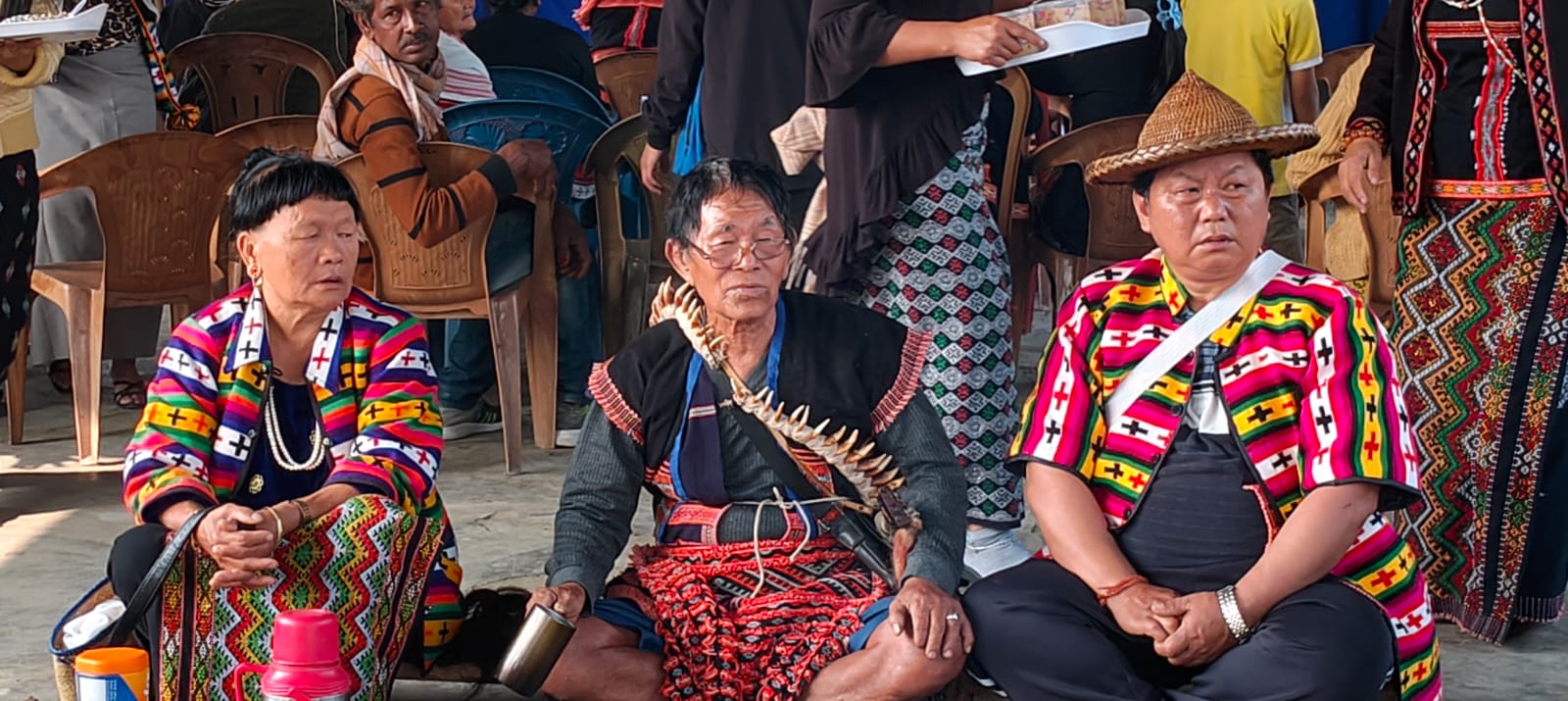
Reh belongs to the Idu Mishmi and is concerned above all with kinship — the bond between a family and its relatives by marriage, and between the living and their ancestors. It is a costly festival to host, prepared over months, and the household that sponsors it takes on an obligation to feed and shelter everyone who comes.
The central figure is the Igu, the Idu priest, whose chanting can continue through the night in a sequence that names lineages, spirits and places. Around that, guests eat, drink and dance in long linked lines. Idu weaving is one of the most distinctive textile traditions in the eastern Himalaya, and Reh is where it is worn rather than displayed: coats, shawls and the silver ornaments that mark seniority.
The Dibang is remote by any standard — Roing at the edge of the plains, then a long climb towards Anini through forest that shelters some of the least-documented biodiversity in India. Mehao Lake and the Dibang Wildlife Sanctuary sit within reach, and the drive itself is a significant part of the journey. Road conditions here change with weather and should be reconfirmed close to departure.
Plan around Reh if remoteness is not a drawback, and if you are more interested in ritual and kinship than in spectacle.
Combine withRoing + Mehao and the Dibang Valley road towards Anini, where conditions allow.
Explore our complete Reh Festival guide →More festivals of Arunachal Pradesh →
07 · Arunachal Pradesh
Chalo Loku Festival
- Community
- Nocte
- Where
- Khonsa and Nocte villages of Tirap district
- Typical period
- Late November, around three days
- Ideal trip length
- 5–7 days from Dibrugarh
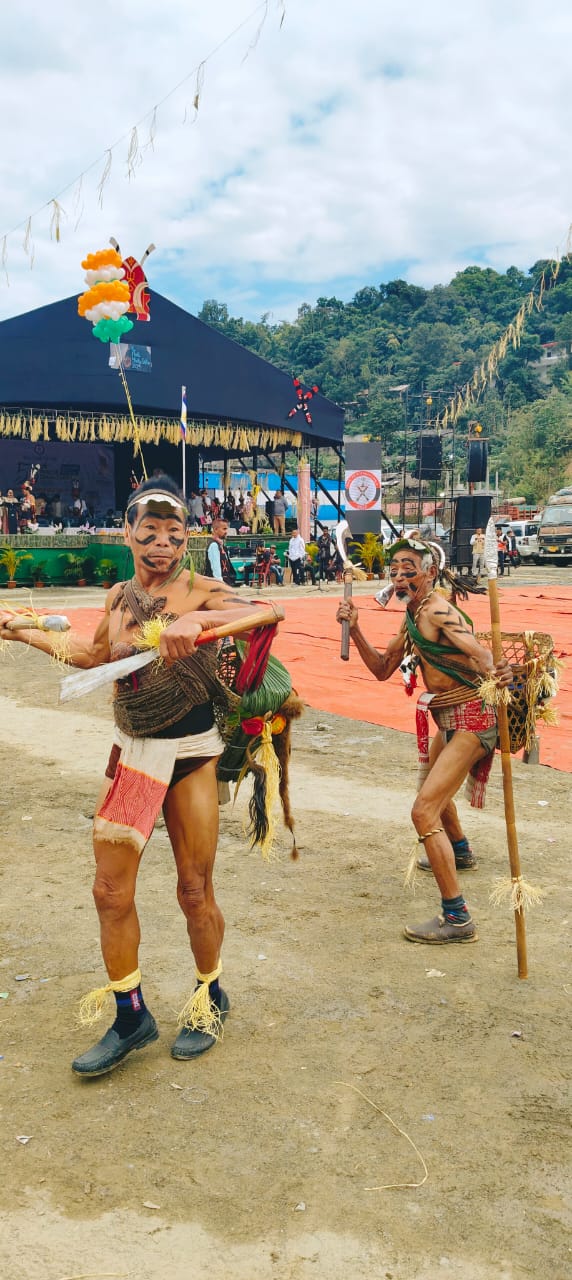
Chalo Loku is the harvest festival of the Nocte, centred on Khonsa and the Nocte villages of Tirap district. It is a Nocte festival — not a Wancho one, although the two communities are neighbours in the same belt and share elements of village organisation and dress. The name refers to the season of rest that follows the harvest, when the fields are cleared and the community turns to feasting, ancestral offerings and the settling of village affairs.
Days are structured around the movement between households and the ceremonial ground: dao blades carried in dance, ornaments of boar tusk and beads, wooden gates and posts associated with the chief's house, and long communal meals with rice beer. Chiefly authority is still meaningful among the Nocte, and much of what happens is decided by village elders rather than by any tourism programme.
Tirap is one of the least-visited districts in Arunachal Pradesh. Khonsa is the practical base; the road in from Assam runs through Deomali and can be slow. Access to particular villages, and permission to attend particular rituals, depends on local arrangements and the security situation at the time, both of which need checking before travel rather than assuming.
Plan around Chalo Loku if you want a harvest festival largely outside the travel circuit, and are willing to accept that some doors may stay closed.
Combine withKhonsa + Tirap district and Nocte villages, where access and permissions allow.
Explore our complete Chalo Loku Festival guide →More festivals of Arunachal Pradesh →
08 · Nagaland
Sekrenyi Festival
- Community
- Angami
- Where
- Kohima and Angami villages — Khonoma, Jakhama, Kigwema
- Typical period
- Late February, around ten days
- Ideal trip length
- 4–6 days based in Kohima
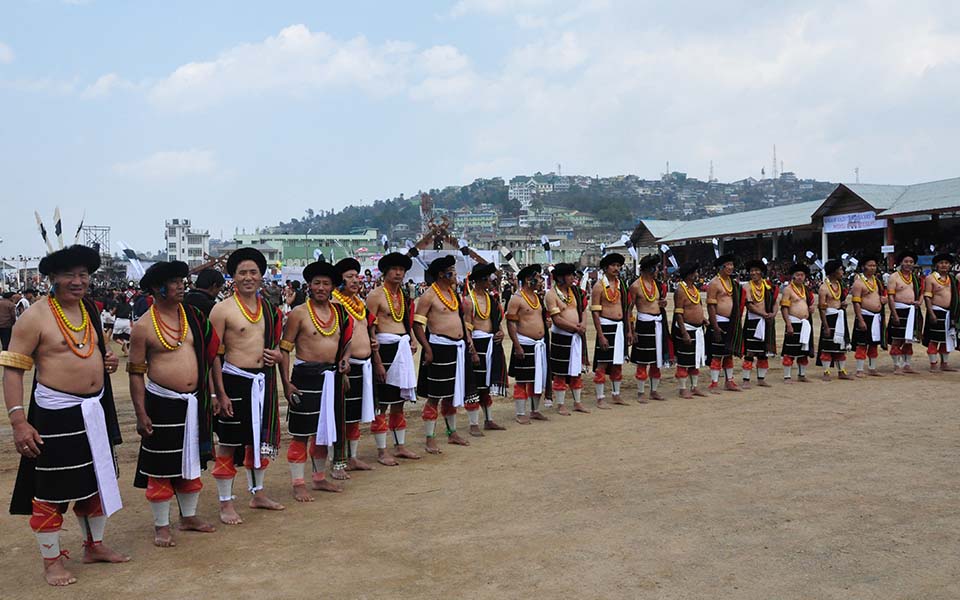
Sekrenyi is a festival of purification. Among the Angami it cleanses the body and the village before the new agricultural year, and the sequence is precise: the drawing of water from the village well at first light, ritual washing, the sanctification of the household, days of feasting, and the thekra hie — young people gathered to sing through the afternoon.
It is a village festival, and it feels like one. There is no arena and no ticket; what a visitor sees depends on which household or khel they are with. Men in black kilts with cowrie rows, red-and-black shawls whose patterns mark status, wooden meat platters carried between houses, and hours of unhurried conversation. The bridge-pulling and gate-pulling ceremonies in some villages mark the closing of the cycle.
Kohima in late February is cold and clear, and the Angami villages around it are among the most rewarding in Nagaland: Khonoma with its terraces and conservation history, Kigwema and Jakhama on the Kisama road, Touphema for a community-run stay. For travellers who cannot attend Hornbill in December, Sekrenyi is the stronger cultural choice, and it is quieter by a wide margin.
Plan around Sekrenyi if you want Angami village life in its own rhythm rather than a state programme.
Combine withKohima + Khonoma and the Angami villages of Southern Angami country.
Explore our complete Sekrenyi Festival guide →More festivals of Nagaland →

09 · Manipur
Heikru Hidongba
- Community
- Meitei
- Where
- Bijoy Govinda, Imphal — the Thangapat moat
- Typical period
- September, around the Heikru month in the Meitei calendar
- Ideal trip length
- 3–5 days in the Imphal valley, subject to advisories
Heikru Hidongba is a Meitei ritual boat race held on the narrow Thangapat moat at Bijoy Govinda in Imphal. It is religious before it is sporting: offerings are made, the boats are consecrated, and the race is understood as an act performed for the wellbeing of the land rather than as a contest between clubs.
The boats are long and very narrow, crewed by rowers seated one behind the other in white dhoti and turban, with a helmsman standing at the stern. Along the banks the crowd is local, families rather than tour groups, and the rhythm of drums and calls carries the length of the water. For a traveller it is a rare chance to see a living court-and-community tradition of the Imphal valley rather than a staged performance.
Manipur's cultural depth extends well beyond the day itself — Kangla, the historic seat of Meitei kingship; Ima Keithel, the women-run market in Imphal; Loktak Lake with its floating phumdi and the Sangai deer of Keibul Lamjao; and the Manipuri dance and Lai Haraoba traditions that shape the valley's ritual year.
Manipur is the one entry on this list where the practical situation must be checked first. Travel advisories, permits and local conditions in the state have changed repeatedly in recent years, and any journey should be planned on current official advice.
Combine withImphal, Kangla and Loktak, strictly subject to current advisories and permissions.

10 · Assam
Rongali Bihu (Bohag Bihu)
- Community
- Assamese, with distinct forms among many communities of the Brahmaputra valley
- Where
- Across Assam — Guwahati, Jorhat, Sivasagar, Majuli and countless villages
- Typical period
- Mid-April, from around 14 April
- Ideal trip length
- 5–8 days along the Brahmaputra
Rongali Bihu opens the Assamese year in mid-April, at the turn from dry to sowing season. The first day, Goru Bihu, belongs to cattle: animals are washed at the river, rubbed with turmeric and fed pieces of gourd and brinjal. The days that follow move to households — new clothes, gamosa given as a gesture of respect, pitha and laru offered to visitors, and husori troupes walking from courtyard to courtyard singing blessings.
The dance is what most people picture, and in April it is everywhere: village grounds, town stages, tea-estate clubs and, increasingly, large public functions in Guwahati. Away from the stages the older forms survive — mukoli bihu danced in the open, dhol, pepa made from buffalo horn, gogona and toka. Bihu is also not a single tradition: Bodo, Mising, Deori, Rabha and other communities of the valley hold their own spring festivals in the same season.
Assam is the natural hinge of a Northeast journey — Kaziranga and Manas for wildlife, the Ahom monuments at Sivasagar, the satras of Majuli where Vaishnavite dance-drama and mask-making are still taught, and the tea districts of the upper valley. April is warm and green, before the heaviest rain.
Plan around Bihu if you want a festival of ordinary life rather than of ceremony, and a route that connects easily to everywhere else in the region.
Combine withGuwahati or Jorhat + Majuli, Sivasagar and Kaziranga.
Explore our complete Rongali Bihu guide →More festivals of Assam →
Attending festivals respectfully
Most of these occasions are held by communities for themselves, and visitors are accommodated rather than catered to. A few habits make the difference between being a guest and being an intrusion.
- Ask before making close-up portraits, and accept a refusal without negotiating. Elders in the best-known villages are photographed constantly.
- Ritual grounds, morungs, priests' enclosures and some village gates may be restricted at certain moments. Wait to be invited in.
- Follow the instructions of village organisers, hosts and elders — they, not the itinerary, decide what is open on a given day.
- Keep back from ceremonies in progress. A long lens and a step backwards usually produce better photographs than pushing to the front.
- Dress and behave as you would at a religious occasion at home: modest clothing, shoes off where indicated, no interrupting for a better angle.
- Drone flying near international borders or over ritual grounds needs explicit local consent, and near frontier villages it is a security matter.
- Buy textiles, baskets and food directly from weavers, cooperatives and homestays. It is the most reliable way for spending to stay in the village.
- Ask before recording chants or songs; some are restricted to particular clans or moments in the ritual cycle.
Practicalities change too. Dates, programmes, road conditions, entry rules and village permissions are all revised locally and sometimes at short notice, and permits for foreign nationals now apply across more of the region than they did a few years ago — see our guide to Protected Area and Inner Line Permits. Reconfirm everything close to departure rather than at the time of booking.
Frequently asked questions
- Which is the most famous festival in Northeast India?
- The Hornbill Festival in Nagaland is the best known internationally. It is held at Kisama near Kohima each December and brings together all 17 recognised tribes of Nagaland in one venue. Fame is not the same as depth, however: village festivals such as Aoleang, Sekrenyi, Myoko and Chalo Loku are smaller, less organised for visitors and often more rewarding for travellers who want to spend time with a community rather than watch a programme.
- What is the best time to visit Northeast India for festivals?
- There are three strong windows. Late February to early April covers Sekrenyi, Myoko, Mopin and Aoleang, with clear weather across Arunachal Pradesh and Nagaland. Mid-April brings Rongali Bihu in Assam and the start of the sowing season. November and December cover Wangala in the Garo Hills, Chalo Loku in Tirap and Hornbill in Nagaland, which is also the driest and coolest travel period. The monsoon months of June to September are difficult for hill roads.
- Which festivals in Northeast India are best for cultural travellers?
- For village-level ritual and time with hosts rather than audiences, Aoleang in Mon, Myoko in Ziro, Sekrenyi around Kohima, Reh in the Dibang Valley and Chalo Loku in Tirap are the strongest choices. Wangala in the Garo Hills sits between the two, with a large gathering that still follows community ritual. Hornbill and Bihu are excellent introductions but attract far larger crowds.
- Do festival dates in Northeast India change every year?
- Some do and some do not. Hornbill runs 1–10 December each year, and Rongali Bihu begins around 14 April. Many others follow agricultural or lunar cycles and are announced by community bodies or district administrations a few weeks or months in advance, so the period is predictable but the exact days are not. Always reconfirm before booking flights — our festival dates page tracks confirmed announcements.
- Do travellers need permits to attend festivals in Northeast India?
- It depends on the state and on your nationality. Assam, Meghalaya and Tripura require no special permit. Arunachal Pradesh requires an Inner Line Permit for Indian citizens and a Protected Area Permit for foreign nationals. Nagaland, Manipur and Mizoram require an ILP for Indian citizens, and foreign nationals again require a PAP following the Ministry of Home Affairs circular of 17 December 2024. Sikkim uses a Restricted Area Permit for foreign nationals. Rules change; check the current position before booking.
- How far in advance should I plan a festival trip to Northeast India?
- For Hornbill, three to six months ahead — Kohima accommodation and December flights fill early. For village festivals in Arunachal Pradesh and Mon district, two to four months is usually enough for the journey itself, but foreign nationals should allow four to six weeks for permit processing alone, and homestay capacity in small villages is genuinely limited.
Plan a journey around a Northeast Indian festival
Tell us which festival interests you, how many days you have and the kind of journey you prefer. We can help connect the festival with the landscapes, villages and destinations around it — and tell you honestly when a particular week is not the right one to travel.
Prefer a form? Use our contact page, or browse cultural and tribal journeys and the village encyclopedia.