Field journal · Majuli district, Assam
Majuli Island, Assam — what reaching the world's largest river island actually looks like
The ferry ghat, an hour on the Brahmaputra, and then paddy fields — notes from Majuli, the river island at the heart of Assam's Vaishnavite culture.
Quick facts
- Where
- Majuli district, Upper Assam — a river island in the Brahmaputra
- Getting there
- Ferry across the Brahmaputra; the crossing takes roughly an hour
- Main community
- Mising, alongside Assamese, Deori and other communities
- Known for
- Satras and Sattriya tradition, bhaona masks, handloom, paddy landscapes
- Signature festival
- Raas Mahotsav, held in November
- Permits
- None — Assam requires no ILP or PAP
Majuli is a river island in the Brahmaputra, in Upper Assam, and reaching it is still part of the experience. There is no bridge in use yet, so the journey ends at a ferry ghat, and the ghat sets the pace of everything that follows.
This dispatch is about that arrival, and about what the island looks like once you are on it — paddy fields, Mising villages, the Satras that keep Assam's Vaishnavite tradition alive, and the mask workshops of Samaguri. It is written as a set of observations rather than a checklist.
What reaching Majuli actually looks like
Reaching Majuli is still part of the experience.
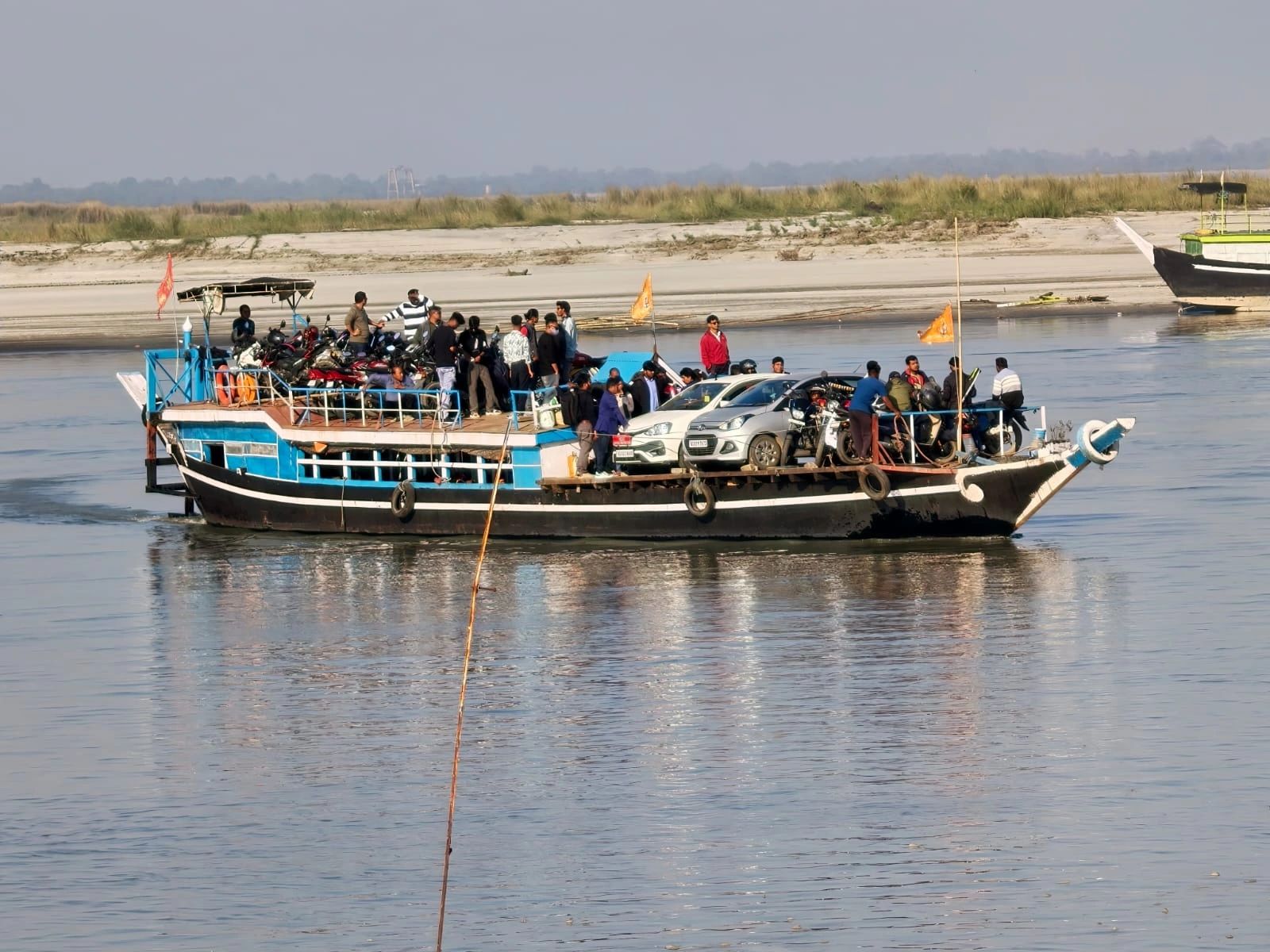
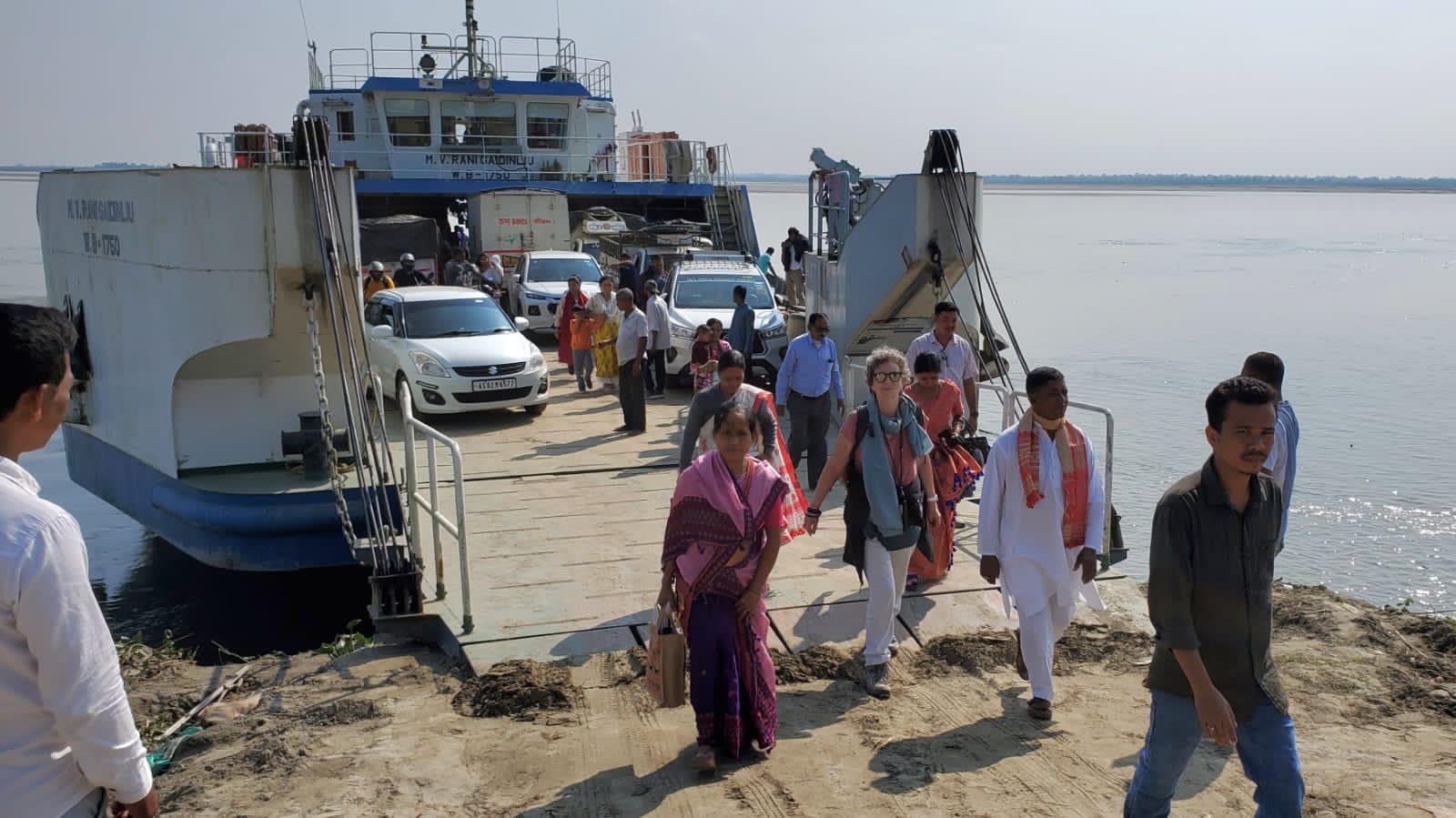
The journey takes you to the ferry ghat, where passengers, cars, motorcycles and supply vehicles board the same ferry for the crossing. Loading depends on available space, water conditions and the ferry schedule, so there can sometimes be a wait.
The crossing takes roughly an hour, sometimes longer depending on the river conditions and schedule.
For people living in Assam, this is an ordinary part of travelling to Majuli. For someone visiting for the first time, it can become one of the most memorable parts of the journey.
There is something unusual about watching your vehicle roll onto a ferry, finding a place on deck and then slowly moving out across the vast Brahmaputra. The river feels less like something you simply cross and more like the beginning of Majuli itself.
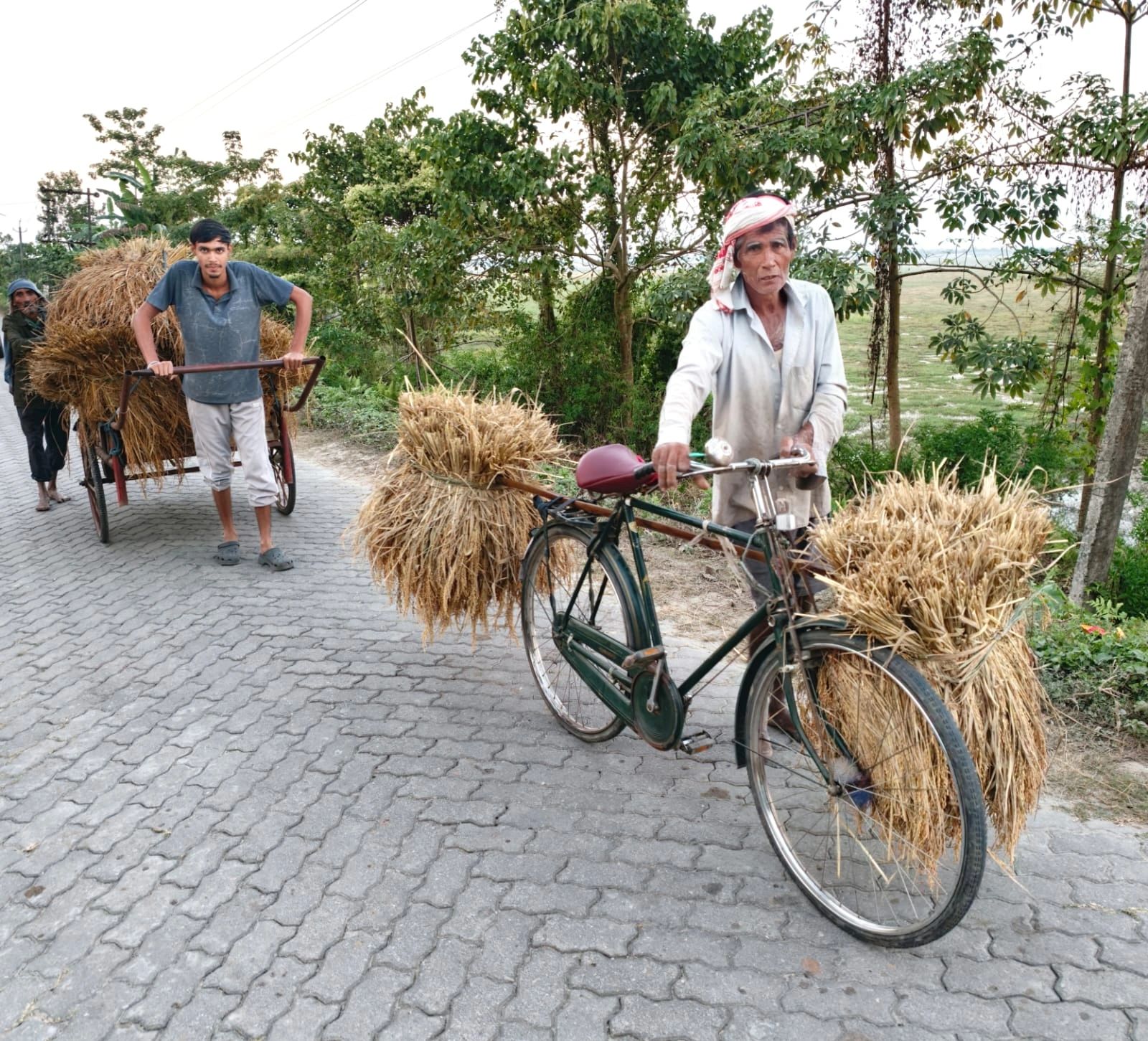
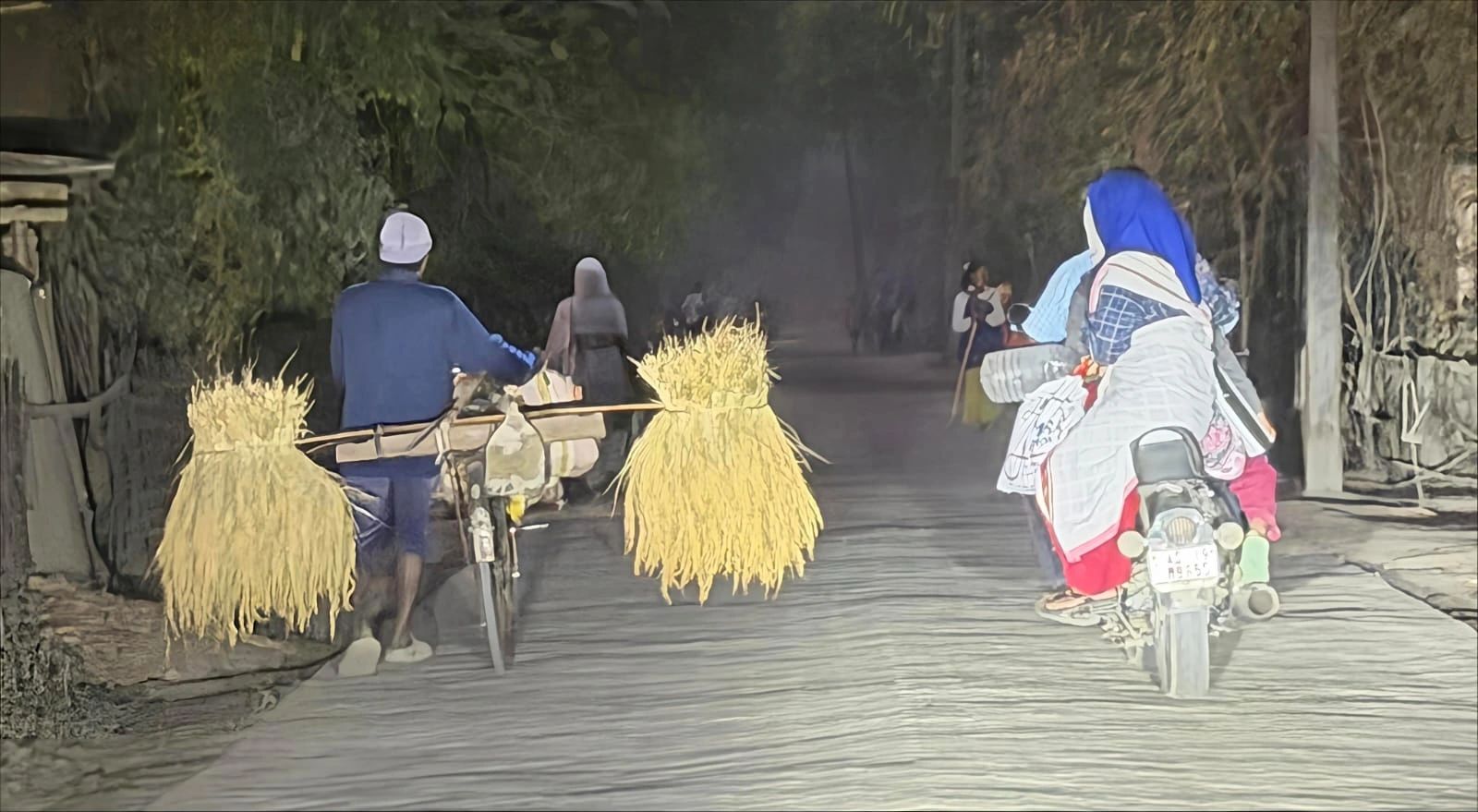
Once you reach the island, the landscape changes surprisingly quickly. Within minutes, busy roads give way to paddy fields, small villages and farmland. Depending on the season, you may see people working in the fields or harvesting rice by hand.
Life here moves at a different pace. The infrastructure is simpler, distances can take time, and that is part of understanding Majuli.
Majuli should not be approached as a conventional luxury destination. It is an experience destination.
A bridge will eventually change the way people reach the island, making the journey faster and easier. But for now, the ferry remains part of the character of travelling to Majuli.
Perhaps one day visitors will cross the Brahmaputra without giving much thought to the journey. For the moment, you still have to cross the river. And somehow, that feels like the right way to arrive in Majuli.

The Brahmaputra, and why the crossing sets the tone
The Brahmaputra here is not a channel you glance at from a bridge. It is wide, braided and full of sandbars, and the ferry route bends around whatever the river has decided to do that season. In the low-water months the channels shift and the ghats move with them; in high water the crossing feels open, almost sea-like.
On deck, the trip is unhurried and sociable. People sit on the roof or between the parked motorcycles, tea gets passed around, and the far bank stays a thin brown line for a long time before it resolves into trees and a landing ramp.
Ferries run to a daily schedule rather than continuously, and the last service of the day matters. Plan the crossing with time in hand at both ends, especially if you are carrying a vehicle.
Paddy fields, farm roads and everyday village life
Majuli is farmland before it is anything else. Rice dominates — Assam grows a great many traditional varieties, and on the island you see the whole cycle depending on when you come: flooded fields, green fields, and then the harvest carried in by bicycle, cart and shoulder.
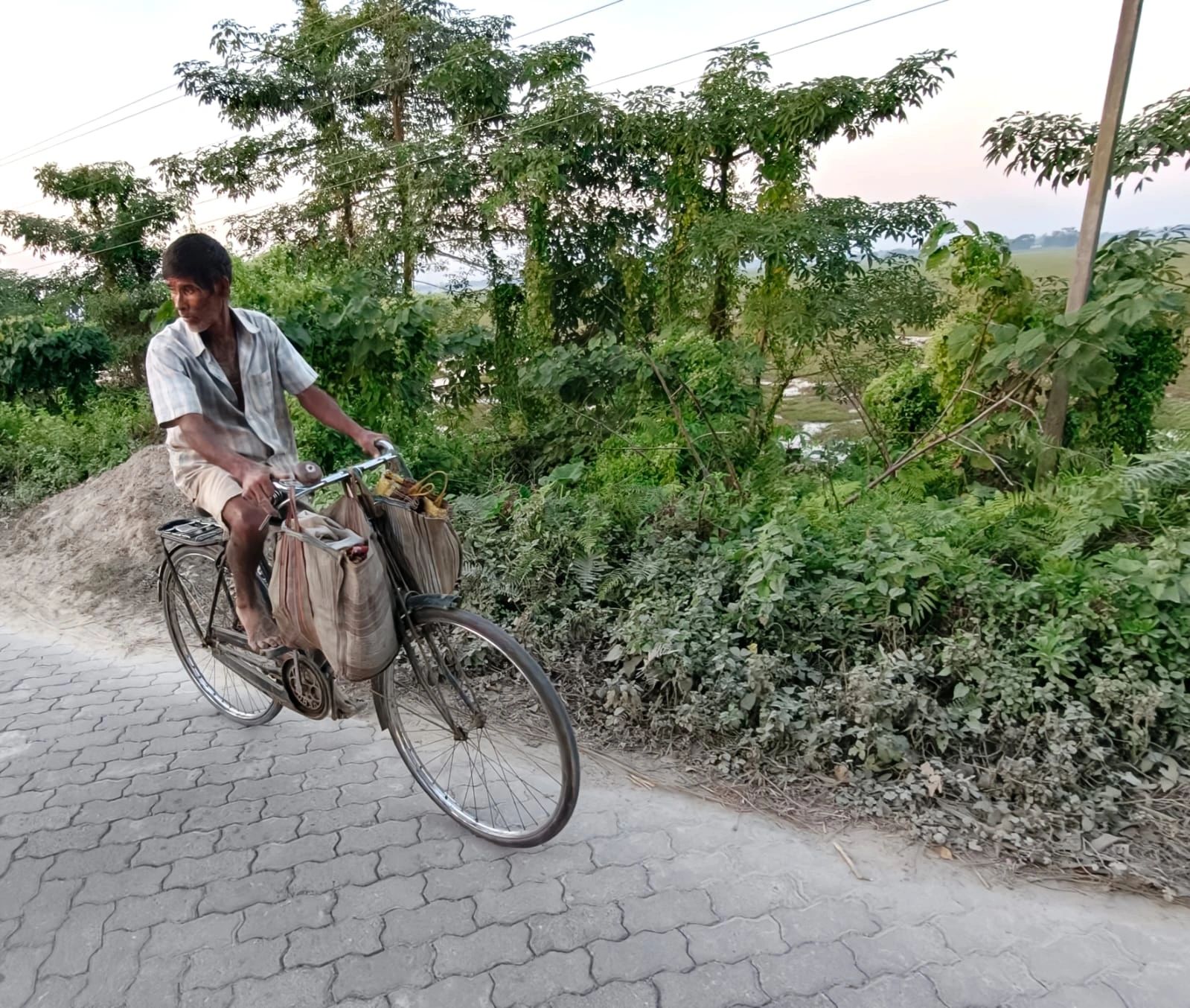
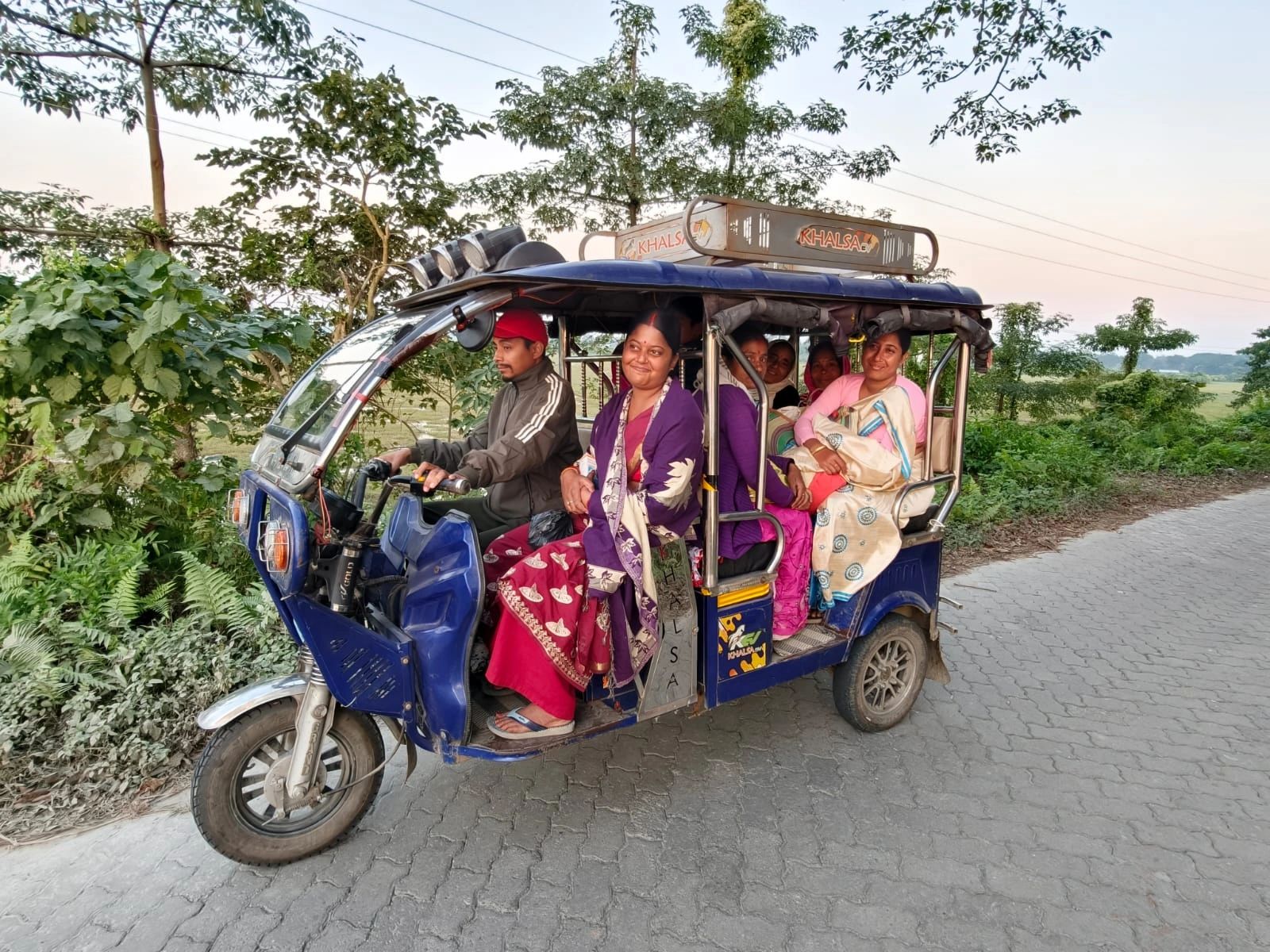
The roads are narrow and mostly quiet. Bicycles, small e-rickshaws and motorcycles do the local work; a bundle of cut paddy tied across a bicycle frame is one of the most common sights of the harvest weeks.
This is worth saying plainly: much of what makes Majuli memorable is not an attraction. It is the ordinary rhythm of a farming island — people moving between fields and homes, in the early light and again at dusk.
Mising villages, stilt houses and handloom
The Mising are the largest community on Majuli, a riverine people long settled along the Brahmaputra and its tributaries. Their villages are the ones you pass most often on the island's inner roads.
The traditional Mising house, the chang ghar, is built on stilts of timber or bamboo — a direct answer to a river island that floods. Living space sits above the ground, with the area beneath used for storage and livestock. Many houses today mix bamboo, timber and tin, but the raised form persists because the reason for it has not gone away.
Handloom is part of daily life rather than a display. Looms sit under or beside the house, and weaving is done largely by women; the Mising ere and the wider Assamese handloom tradition, including Assam's silks, are woven at village scale across the island. If you want to buy, buy from the household that wove it.
The Satras — Majuli's Vaishnavite monasteries
Majuli is the heartland of Assam's Neo-Vaishnavite tradition, founded on the teachings of the 15th–16th century saint-reformer Srimanta Sankardeva and his disciple Madhavdeva. The institutions that carry it are the Satras — monastic centres built around a prayer hall, the namghar or kirtanghar, where devotees gather for congregational prayer, chanting, music and performance.
Several Satras function on the island today, among them Garmur, Auniati, Dakhinpat, Uttar Kamalabari and Samaguri. They are living religious institutions, not museums: monks live and train there, and daily prayer continues whether or not visitors are present.
Visiting is generally welcomed, with the usual expectations of a place of worship — remove your shoes, dress modestly, keep your voice down, and ask before photographing people or interiors. Some Satras and some spaces within them have restrictions; follow what you are told rather than what you have read.
Sattriya dance and the mask makers of Samaguri
Sattriya is the classical dance form that grew inside these monasteries as part of worship — devotional dance-drama performed with rigorous technique, now recognised as one of India's classical dance forms and taught and performed well beyond Assam. On Majuli you can still see it where it began, in the Satra prayer halls.
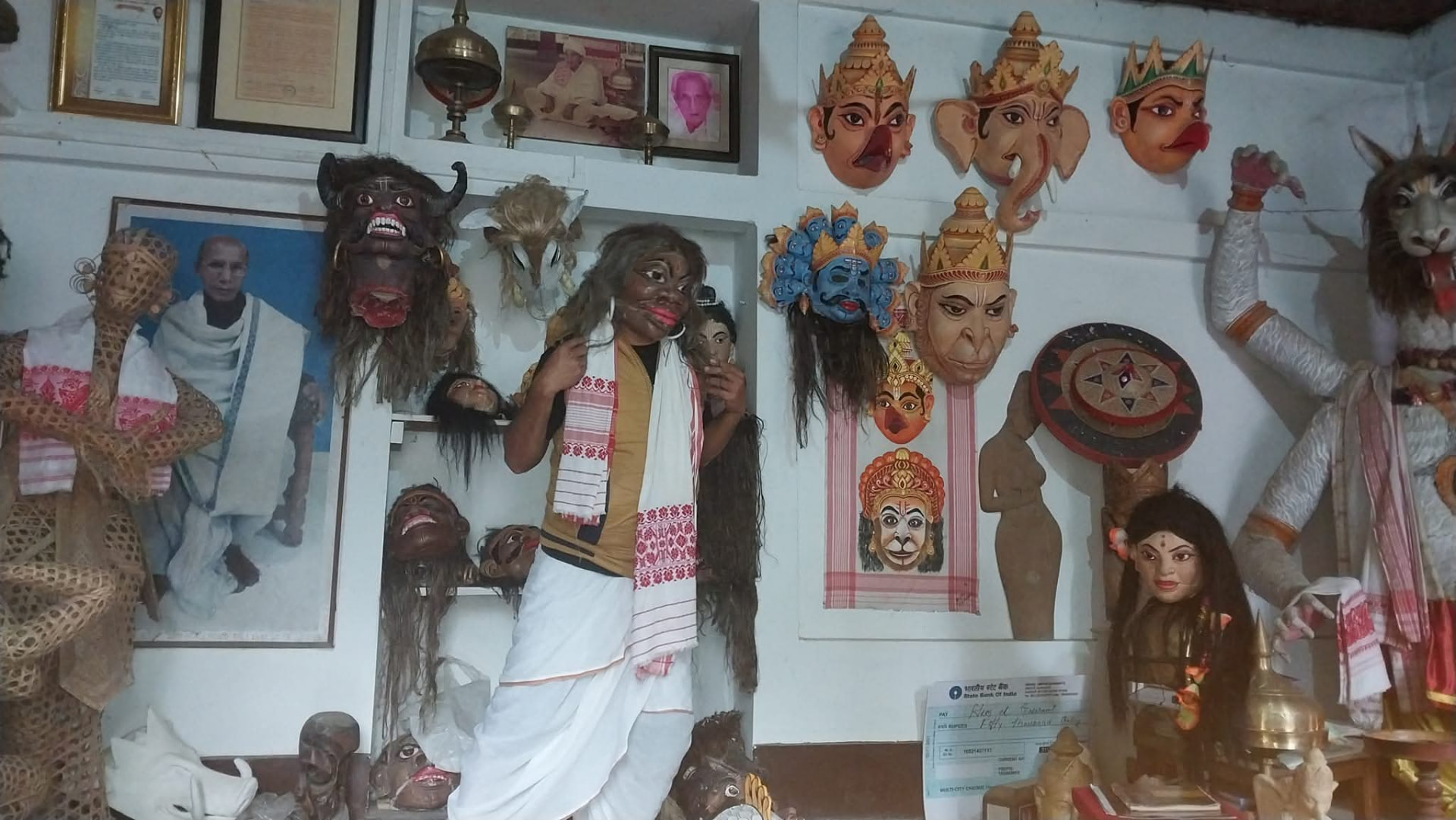
Closely tied to it is bhaona, the traditional Vaishnavite theatre in which stories from the epics are enacted. The masks worn in bhaona — mukha — are the craft Majuli is best known for, and Samaguri Satra is the centre of that tradition.
The masks are built up over a bamboo frame, layered with cloth and a clay-and-cow-dung mixture, dried, smoothed and then painted. Sizes range from face masks to large forms that cover the whole body of the performer. Workshops here are working spaces: makers will often show you the stages side by side, from bare bamboo armature to finished, painted face.
Pottery, food and the pace of the day
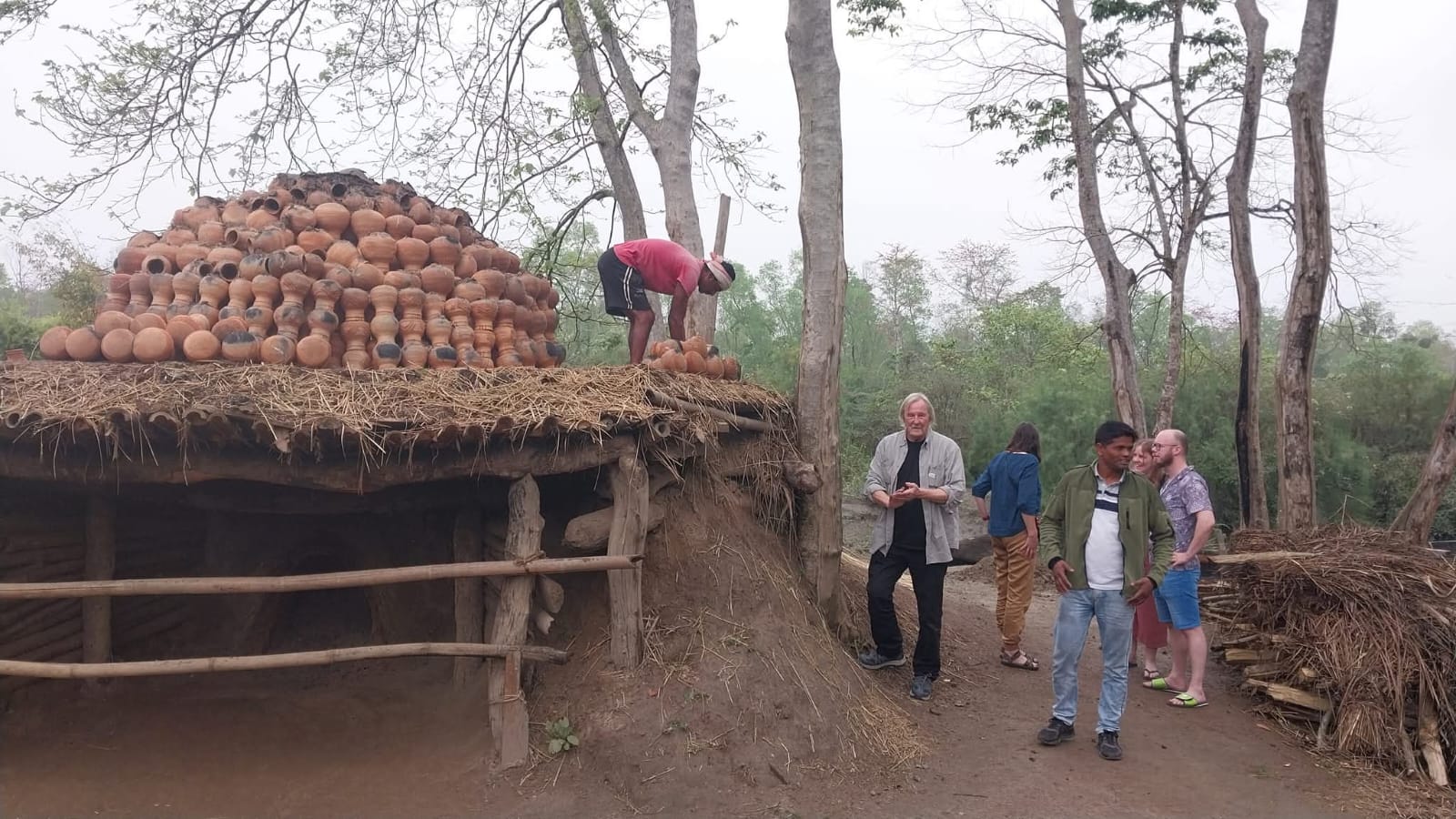
Majuli also has a hand-built pottery tradition, worked without the wheel from river clay and fired in open kilns stacked with pots under straw. It is a slow, seasonal craft and, like the weaving, it belongs to particular villages rather than to the island as a whole.
Food is simple and rice-centred: rice with dal, seasonal greens, river fish, and in Mising households the fermented rice beer apong, prepared at home. Menus at homestays generally follow what is cooking that day rather than a fixed card. Say in advance if you do not eat fish or meat.
The day is shaped by daylight. Things start early, activity thins in the afternoon heat, and by dusk the roads belong to people heading home. There is very little nightlife, and that is the point.
Raas Mahotsav and Majuli's living festival calendar
The festival Majuli is most associated with is Raas Mahotsav, held in November and centred on the Satras and village namghars. Over several days the life of Krishna is enacted through bhaona-style performance, music and dance, with whole villages involved in preparation.
It is a religious observance first and a spectacle second. Performances run late, halls are full, and the audience is largely local. If you plan to be on the island for it, arrange accommodation and ferry timings well ahead — this is the island's busiest period.
Beyond Raas, the Assamese calendar shapes the year here as it does across the state, with Bihu marking the agricultural seasons. Our Assam festivals guide has the wider picture.
How Majuli feels different — and how to travel here well
Majuli is not set up as a resort destination and does not pretend to be. Accommodation is mostly homestays and small bamboo cottages, power can be intermittent, roads are modest, and the ferry decides your arrival and departure. Travellers who come expecting a serviced holiday are usually disappointed; travellers who come to spend time in a working agricultural and religious landscape are usually not.
Erosion is a real and present issue: the Brahmaputra has taken a great deal of the island's land over the last century, and land loss is part of ordinary conversation here. Treat it as context, not as a photo opportunity.
- Ask before photographing people, houses, prayer halls and craft workshops — and accept a no.
- Remove shoes at namghars and Satra prayer halls, dress modestly, and stay quiet during prayer.
- Buy handloom, masks and pottery directly from the household or workshop that made them.
- Book homestays rather than day-tripping if you can — the island rewards an overnight stay.
- Check the ferry schedule for both directions on the day, and do not plan around the last service.
- Carry cash; card acceptance and connectivity are limited outside the main settlements.
Essential travel information
- Nearest access town
- Jorhat, on the south bank, is the usual road-and-ferry approach; ghats and timings shift with the river.
- Ferry
- Passenger and vehicle ferries run to a daily schedule. Loading depends on space, water conditions and the schedule, so allow for a wait.
- Getting around
- Hired car, motorcycle, bicycle or shared e-rickshaw. Distances are short but slow.
- Where to stay
- Homestays and small bamboo cottages, several in Mising villages. Book ahead in November.
- Best time
- October to March for dry weather and clear roads; November for Raas Mahotsav. Monsoon brings flooding.
- Permits
- Assam needs no Inner Line Permit or Protected Area Permit — see our permits guide.
- Money & network
- Carry cash. ATMs and mobile data are limited away from the main settlements.
Did you know?
- Majuli is a river island in the Brahmaputra and is widely described as the largest of its kind; it became a district of Assam in 2016.
- The island's Satras were established as part of the Neo-Vaishnavite movement founded by Srimanta Sankardeva in the 15th–16th century.
- Sattriya, which developed inside these monasteries as devotional dance-drama, is recognised as one of India's classical dance forms.
- Bhaona masks at Samaguri Satra are built over a bamboo frame with cloth and a clay mixture, then painted by hand.
- The Mising build chang ghar — houses raised on stilts — because the island floods.
Frequently asked questions
- How do you reach Majuli Island?
- By ferry across the Brahmaputra, usually approached by road from Jorhat in Upper Assam. Passengers, cars, motorcycles and supply vehicles board the same ferry, and loading depends on available space, water conditions and the schedule. The crossing takes roughly an hour, sometimes longer.
- How long is the Majuli ferry crossing?
- Roughly an hour, sometimes longer depending on river conditions and the ferry schedule. Ferries run to a daily timetable rather than continuously, so check both the outbound and return timings on the day.
- Do foreign visitors need a permit for Majuli?
- No. Assam does not require an Inner Line Permit or a Protected Area Permit, so a standard Indian visa is enough. Permit rules differ in some neighbouring states — see our Northeast India permits guide.
- What is the best time to visit Majuli?
- October to March, when the weather is dry and roads are easiest. November is the month of Raas Mahotsav, the island's main festival, and also its busiest period. The monsoon brings high water and flooding.
- What is Majuli famous for?
- Its Satras — Vaishnavite monasteries founded in the tradition of Srimanta Sankardeva — along with Sattriya dance, bhaona mask making at Samaguri Satra, Mising village life and handloom, hand-built pottery, and the paddy landscapes of the river island itself.
- What is Samaguri Satra known for?
- Traditional mask making. The masks used in bhaona, Assam's Vaishnavite theatre, are built over a bamboo frame, layered with cloth and a clay mixture, dried and then painted by hand. Workshops at the Satra show the stages of the craft.
- When is Raas Mahotsav in Majuli?
- Raas Mahotsav is held in November, centred on the island's Satras and village namghars, with the life of Krishna enacted over several days through performance, music and dance. See our Raas Mahotsav page for details.
- Is Majuli a luxury destination?
- No. Accommodation is mostly homestays and small bamboo cottages, infrastructure is simple, and travel depends on the ferry. Majuli is best approached as an experience destination rather than a conventional resort holiday.
- Can you visit Mising villages on Majuli?
- Yes. Mising villages are part of everyday life across the island, and many homestays are run by Mising families. Ask before photographing houses or people, and buy handloom directly from the household that wove it.
- How many days do you need in Majuli?
- Two nights lets you cover the ferry crossing, several Satras including Samaguri, a mask workshop and time in the villages without rushing. A single day trip is possible but is largely spent on the ferry and the road.
Photo gallery — from the same trip
More from the journal
Among the Monpa: Thembang, Sangti Valley and Dirang Dzong
Stone houses, inscribed mithun skulls, yak meat drying in the winter sun — three days in the Monpa heartland of West Kameng, Arunachal Pradesh.
Aoleang Festival, Mon — Where the Konyak New Year Comes Alive
Six days of spring in Mon district, when the Konyak lay down the old year, put on their fathers' headgear and dance the new one in.